
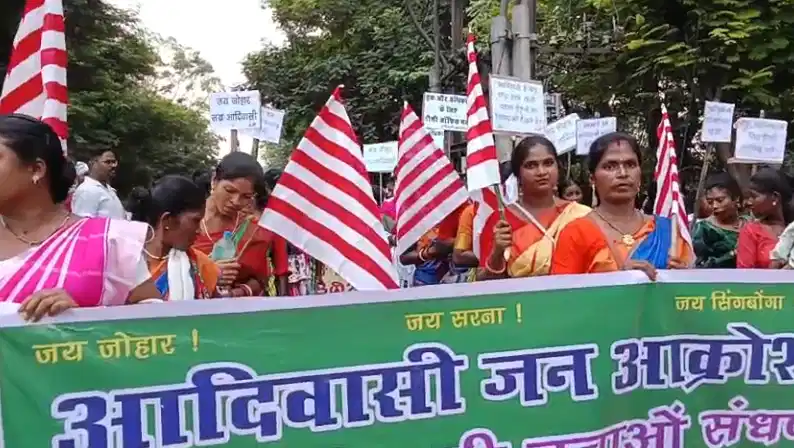
Tribal Communities Rally Against Kurmi ST Status in City

Tribal Communities Rally Against Kurmi ST Status in City

Thousands March to DC Office Demanding Rejection of Inclusion Proposal
Key Points:
- Massive rally starts from Karandih Chowk reaches Deputy Commissioner office
- Tribal leaders warn government against compromising their cultural identity
- Memorandum submitted to Chief Minister through district administration
JAMSHEDPUR – Tribal communities organized a massive protest rally opposing the inclusion of Kurmi society in Scheduled Tribe category.
Thousands of tribal community members gathered at Karandih Chowk. They came from various areas of the city. The protesters marched towards the Deputy Commissioner’s office.
The rally served as a strong warning. Tribal societies will not compromise on their culture. Their identity and rights remain non-negotiable.
However, tribal leaders termed the demand a conspiracy. The inclusion move directly attacks tribal rights. They expressed serious concerns about the proposal.
“We have no enmity with Kurmi community,” a tribal leader stated. “Our identity, lifestyle, worship methods differ completely. Our language and traditions are distinct.”
Moreover, tribal communities maintain unique forest connections. They worship trees and stones traditionally. Their cultural practices remain fundamentally different.
“Any attack on our culture is unacceptable,” another leader emphasized. The central government allegedly uses political tactics. The Kurmi community is being pushed forward strategically.
In addition, protesters submitted a memorandum. The document was addressed to Chief Minister. It was handed over through Deputy Commissioner.
The tribal community strongly opposes the inclusion. Their forest-based lifestyle defines their identity. Sacred natural elements form their worship practices.
Furthermore, leaders highlighted distinct linguistic traditions. Tribal customs have evolved over centuries. These cannot be shared with other communities.
The protest demonstrated widespread tribal unity. Participants came from multiple localities. They demanded immediate government intervention.
Besides, the rally showcased cultural solidarity. Traditional identities must be protected, leaders insisted. Political maneuvering will not be tolerated.
The memorandum outlined specific tribal concerns. It emphasized protection of constitutional rights. The document demanded rejection of Kurmi inclusion.
Tribal societies maintain ancestral forest relationships. Their worship systems differ from mainstream practices. These unique characteristics define ST status eligibility.


Join Our Newsletter
Related News
Opinion
You May Also Like
Read More
Discussion
Readers' Comments
Recent
EDITOR PICKS
POPULAR POSTS
MUST READ

ABOUT US
Town Post is a leading News Portal of Jamshedpur and Jharkhand.
FOLLOW US
Contact us: editor@townpost.net
© Town Post, Jamshedpur