
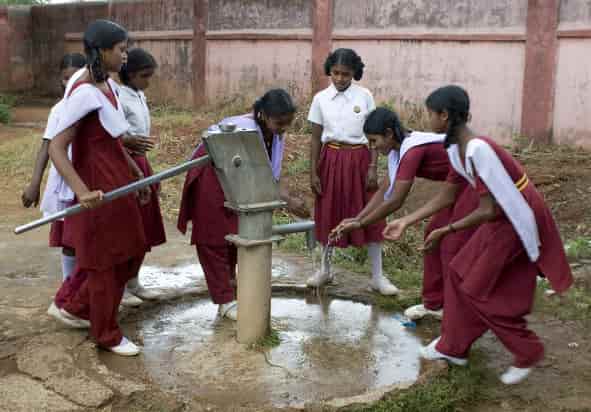
West Singhbhum Leads Jharkhand in Anemia Control, Sets Benchmark for Statewide Health Initiatives

West Singhbhum Leads Jharkhand in Anemia Control, Sets Benchmark for Statewide Health Initiatives

West Singhbhum district emerges as a frontrunner in Jharkhand’s fight against anemia.

West Singhbhum outperforms other districts as per the latest HMIS report in Anemia control. Latest data highlight some startling positive results and areas for improvement.
RANCHI : In a substantial public health achievement, West Singhbhum district has been identified as a leader in Jharkhand’s Anemia Mukt Bharat initiative.
The latest figures from the Health Management Information System (HMIS) for the year 2023-24 up to October indicate a robust framework and effective implementation of anemia control programs in the district.
With an impressive Iron Folic Acid (IFA) coverage of 84% among children aged 6-59 months, West Singhbhum has set an exemplary precedent.
This demographic is crucial as early intervention can prevent lifelong health complications associated with anemia. The district’s efforts for this age group eclipse the state average of 54%, revealing a significant lead.
Moreover, West Singhbhum has shown remarkable performance in maternal health, with a near-universal IFA coverage of 95% among pregnant women.
This is notably higher than the state average, which stands at 91%. Lactating mothers in the district also receive substantial support with an 81% coverage rate, ensuring that the benefits of anemia prevention extend beyond childbirth.
While the district’s endeavors for children aged 5-9 years and adolescents reflect a moderate success with IFA coverages of 68% and 66% respectively, these figures still surpass many of its counterparts in the state.
The Anemia Mukt Bharat Index Value for West Singhbhum is an exemplary 82.0, placing it well within the ‘green zone’—the highest level of achievement denoted in the report.
This compares favorably against other districts, with several trailing in the ‘yellow zone’ and some, like Sahibganj, in the ‘red zone’ with a concerning index value of 43.7.
However, despite these successes, there remain areas for improvement.
District officials said that the coverage among children aged 5-9 years and adolescents showcases a slight dip and signals a need for targeted strategies to bolster these figures.
The success of West Singhbhum can be attributed to a series of strategic measures, including rigorous health worker training, community engagement programs, and a robust supply chain of nutritional supplements.
The district’s approach offers valuable insights that could be replicated across Jharkhand to enhance the overall health outcomes.
As the state moves forward, the lessons from West Singhbhum will likely play a critical role in shaping Jharkhand’s health landscape, particularly in the pursuit of eradicating anemia and improving the lives of its youngest citizens and mothers.


Join Our Newsletter
Related News
Opinion
You May Also Like
Read More
Discussion
Readers' Comments
Recent
EDITOR PICKS
POPULAR POSTS
MUST READ

ABOUT US
Town Post is a leading News Portal of Jamshedpur and Jharkhand.
FOLLOW US
Contact us: editor@townpost.net
© Town Post, Jamshedpur