
Samvaad 2025 Concludes with Fellowship Awards

Samvaad 2025 Concludes with Fellowship Awards

Nine Fellows Selected from 572 Applications Representing 122 Tribes
Key Points:
- Tata Steel Foundation announces nine Samvaad Fellowship recipients for 2025
- Selection made from 572 applications spanning 25 states and territories
- Cultural performances showcase Munda, Kuki, Garo and Kandha tribal heritage
JAMSHEDPUR – Samvaad 2025 concluded Tuesday with fellowship awards and vibrant cultural celebrations at Gopal Maidan.
The final day united diverse tribal perspectives. Communities engaged in meaningful dialogue and deliberation. Moreover, celebrations marked the conference’s grand finale.
Sessions addressed multiple themes throughout the day. The Akhada identified synergy between action and reform. Meanwhile, art and craft discussions focused on presentation dynamics. Participants explored design innovation and representation importance.
Tribal healing practices received special attention. The session examined food’s medicinal properties deeply. “You are what you eat,” practitioners emphasized. Furthermore, community discussions celebrated ideas shaping tomorrow’s narratives.
Tata Steel Foundation selected nine Samvaad Fellows. The applications totaled 572 from across India. In addition, submissions represented 122 tribal communities. Twenty-five states and two union territories participated.
Ten applications came from vulnerable tribal groups. The foundation celebrated previous fellowship completions. However, cultural documentation projects now await public release. These represent tangible, meaningful preservation efforts.
A distinguished jury conducted rigorous selection procedures. Dr Sonam Wangchuk from Himalayan Cultural Heritage Foundation served. Moreover, Meenakshi Munda represented Kolhan University’s Anthropology department. Oinam Doren founded Our Village Films initiative.
Parmanand Patel coordinated for SC-ST RTI Odisha. Madan Meena served as honorary director. The Adivasi Academy contributed expertise to evaluations.
Sourav Roy addressed the gathering as CEO. “Since 2017, this fellowship supports community-based efforts,” he stated. The program documents endangered indigenous knowledge systems. On the other hand, it preserves cultural practices systematically.
This year’s fellows pursue diverse projects. Language preservation receives focused attention. In addition, art and oral traditions feature prominently. Environmental efforts and craftsmanship round out initiatives.
“These ideas reaffirm tribal community strength,” Roy noted. Healing practices shared profound wisdom during sessions. Furthermore, unique artistic expressions inspired participants deeply. The Akhada storytelling proved particularly moving.
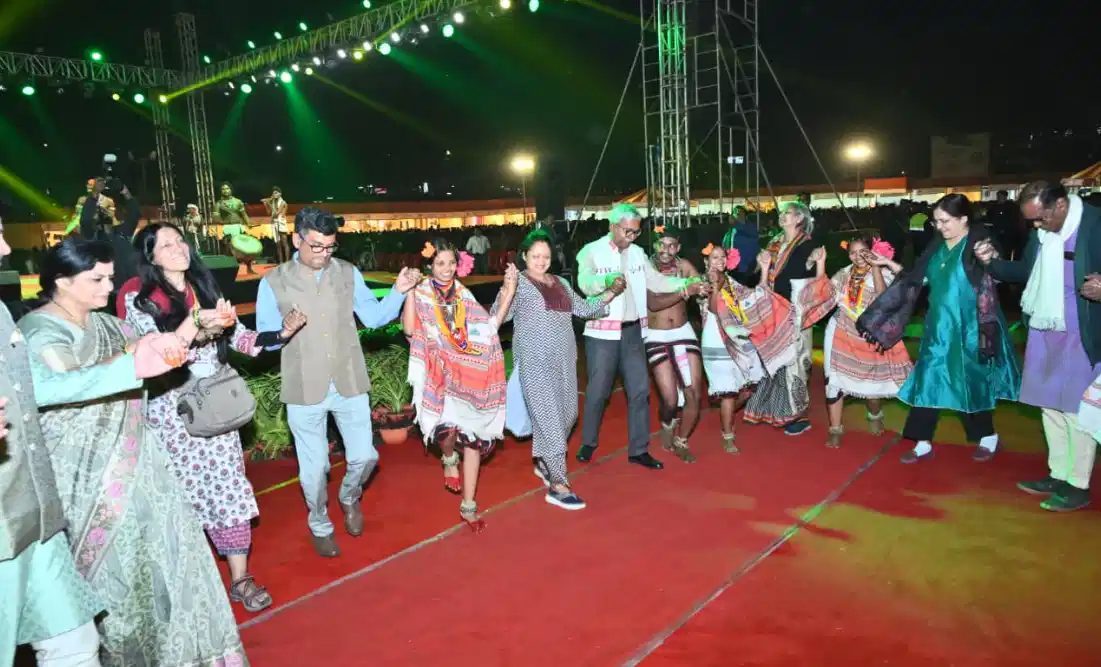
Evening performances celebrated India’s tribal heritage vibrancy. Munda, Kuki, Garo and Kandha tribes presented. Different stories, rhythms and traditions came alive. Meanwhile, audiences experienced diverse cultural expressions.
Garima Ekka delivered captivating Nagpuri melodies. Arjun Lakra joined the musical presentation. However, their performances compelled spontaneous dancing among attendees.
The Atithi hospitality stall attracted continuous crowds. Home cooks from various regions prepared dishes. Moreover, visitors savored authentic tribal cuisine preparations. Traditional food offerings received enthusiastic response.
Art and handicraft outlets operated at Gopal Maidan. Traditional healing displays drew considerable appreciation. Furthermore, authenticity and cultural depth impressed visitors. Artisans demonstrated centuries-old craft techniques throughout.
Previous editions established strong community connections. The fellowship program continues expanding its reach. Meanwhile, documentation efforts preserve vanishing cultural practices. Selected fellows will work throughout 2025.
Projects address risks facing indigenous knowledge systems. Some traditions face imminent extinction threats. However, fellowship support enables systematic documentation efforts. Communities actively participate in preservation initiatives.
The three-day conference featured multiple parallel sessions. Film festival screenings complemented discussion forums. In addition, interactive workshops engaged participants directly. Knowledge exchange occurred across generational divides.


Join Our Newsletter
Related News
Opinion
You May Also Like
Read More
Discussion
Readers' Comments
Recent
EDITOR PICKS
POPULAR POSTS
MUST READ

ABOUT US
Town Post is a leading News Portal of Jamshedpur and Jharkhand.
FOLLOW US
Contact us: editor@townpost.net
© Town Post, Jamshedpur