
Shoe-Throwing Incident at Chief Justice Sparks Outrage in Jamshedpur

Shoe-Throwing Incident at Chief Justice Sparks Outrage in Jamshedpur

Ambedkar Welfare Committee Sends Memorandum to President Murmu
Key Points:
- Advocate throws shoe at CJI B.R. Gavai during live court proceedings
- Committee cites three serious incidents targeting marginalized community leaders
- Demand for strict action against hate posts on social media platforms
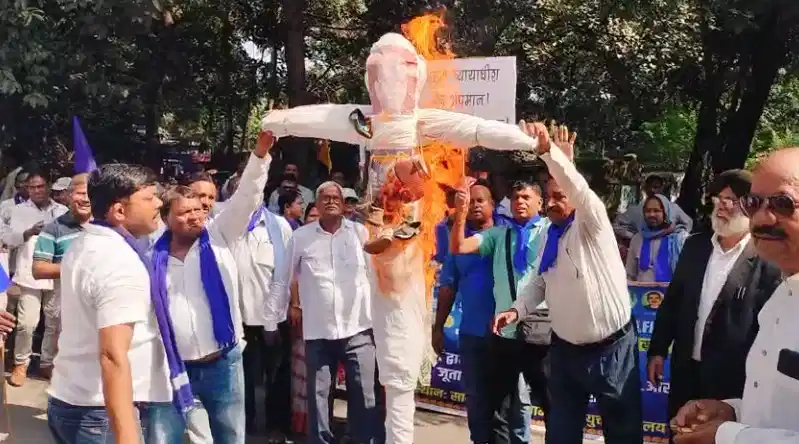
JAMSHEDPUR – A protest rally was organized following the shoe-throwing incident at Supreme Court Chief Justice B.R. Gavai.
Dr. Ambedkar ST-SC-OBC and Minority Welfare Committee led the demonstration. The group submitted a detailed memorandum to President Draupadi Murmu. It was sent through the Deputy Commissioner of East Singhbhum.
Advocate Rakesh Kishore threw a shoe at CJI Gavai. The incident occurred during live court proceedings on October 6. Moreover, it happened inside the courtroom itself.
The committee highlighted three grave incidents across India. These events deeply hurt marginalized communities. All three occurred within recent days.
MP Khogen Murmu from Jalpaiguri faced mob attack. He belongs to the Scheduled Tribe community. The incident took place in West Bengal.
IPS officer Y. Puran Kumar allegedly committed suicide. He served in Haryana police department. However, the DGP and an SP were held responsible.
Committee representatives burnt effigies outside the DC office. They expressed strong condemnation of the incidents. Furthermore, they demanded immediate action.
The memorandum stated that attacking Supreme Court’s dignity insults judiciary. It also directly strikes constitutional principles of equality. Justice and freedom are fundamental values being undermined.
CJI Gavai follows Buddhist faith. He previously belonged to Dalit community. Despite this, he faced inhuman treatment.
Social media platforms witnessed hateful comments after the incident. X, Facebook and WhatsApp hosted objectionable posts. Users made derogatory remarks about Justice Gavai’s caste.
The committee demanded sedition charges against such individuals. It urged central agencies to take strict legal action. Inflammatory content must be curbed immediately.
President Murmu herself comes from Scheduled Tribe community. She understands struggles of marginalized sections well. The committee expects constitutional action from her office.
Conservative mindsets continue working against equality. Some sections oppose humanitarian values actively. Moreover, they perpetuate discriminatory practices.
Biased attitudes toward representatives from deprived classes persist. Such behavior threatens democratic institutions. The judicial and administrative systems need reform.
The organization demanded accountability from both governments. Central and state authorities must address these concerns. Discrimination against marginalized communities requires urgent intervention.


Join Our Newsletter
Related News
Opinion
You May Also Like
Read More
Discussion
Readers' Comments
Recent
EDITOR PICKS
POPULAR POSTS
MUST READ

ABOUT US
Town Post is a leading News Portal of Jamshedpur and Jharkhand.
FOLLOW US
Contact us: editor@townpost.net
© Town Post, Jamshedpur