
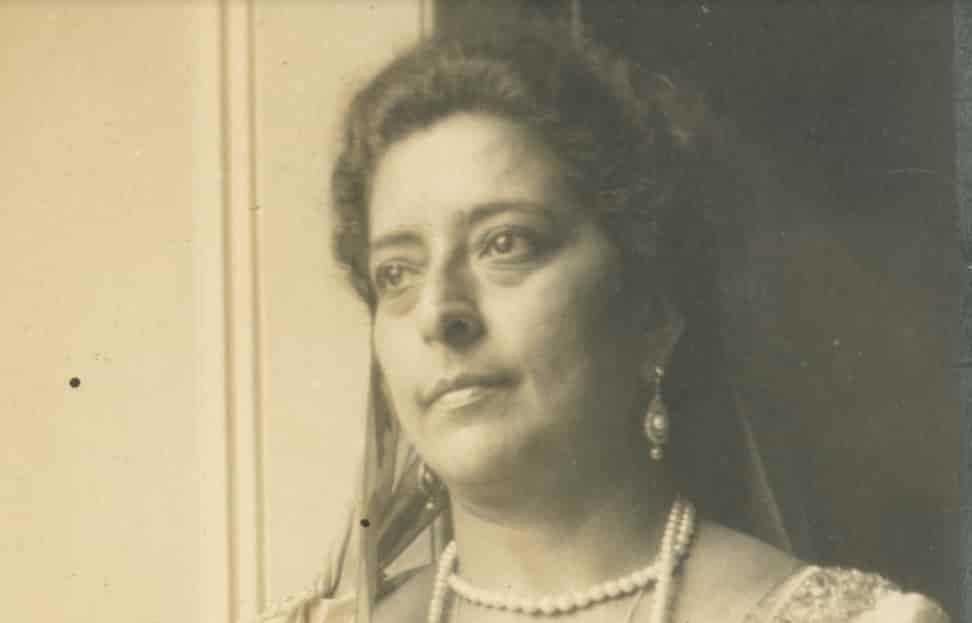
Lady Meherbai Tata: A Trailblazer for Women's Rights and Education in India

Lady Meherbai Tata: A Trailblazer for Women’s Rights and Education in India

Lady Meherbai Tata’s legacy as a leading figure in India’s women’s movement includes pioneering efforts in education, sports, and social welfare.
Lady Meherbai Tata, a tennis champion and social reformer, actively promoted women’s education and fought against purdah and child marriage. Her work, supported by her husband Sir Dorabji Tata, led to significant contributions to India’s educational reforms.
Lady Meherbai Tata has a prominent and a unique place among the pioneers of the women’s movement in India.
She was born on October 10, 1879 in Bombay. In the words of Stanley Reed, former Editor of the Times of India; “Meherbai was of medium height. Of regular feature, clear cut, and clear-eyed, with that flush through the faintly tinted live skin which painter tell us is the perfect complexion, she was the most striking figure even in the great gathering of Bombay society. She was well endowed with brains, learned and accomplished. She was devoted to all outdoor games; a proficient tennis player, she was equally at home in all forms of exercise.”
In 1890, Jamsetji Tata went to Bangalore at the invitation of the Dewan of Mysore, Sir Seshadri Iyer, to assist him in his scheme for the establishment of a research institute. It is on one of these visits that he came in close contact with the Bhabha family. H. J. Bhabha was then the Inspector-General of Education, Mysore State. Jamsetji seems to have had a hand in the selection of Meherbai Bhabha as his daughter-in-law.
The beautiful Meherbai married Dorabji Tata – the elder son of the Founder, Jamsetji Tata on February 14, 1898.
She played in several tennis tournaments and won over sixty prizes. She shared Dorabji’s love of sport and won the Triple Crown in the Western India Tennis Tournament. Together they scored many successes in the All-India Championships. Lady Tata always wearing, as foreign reports phrased it, ‘Eastern dress’ – ‘the Saree’ – not the easiest of garments in which to play a winning game on the courts! She was a good rider and drove her own motor car.
Many a woman in such circumstances would have been content to be a great society lady but Lady Tata however was made of different stuff. She was ever urging to utilise her opportunities to promote the education and well-being of her Indian sisters. She was one of the founders, first of the Bombay Presidency Women’s Council and then of the National Council of Women. She was consulted on the Sarda Act designed to outlaw child marriage. She campaigned for the higher education for women against the purdah system and the practice of untouchability.
With regard to women’s education, she got full support from her husband Sir Dorabji Tata who encouraged her to take over the local school with the object of developing it into a model school. They brought an expert from England to survey the whole field of girls education in India. This survey took over a year and the book in which it took form was for many years the vade mecum which the Board of Education in Whitehall placed in the hands of all women inspectors or teachers proceeding to India, to take up higher education of girls.
Her address at Battle Creek College, USA is her first considered pronouncement of the Indian situation as a whole. She gave her American audience an excellent bird’s-eye view of the history, the art, the religions and the races of India, the Indian States and their rulers, and touched upon the condition of women, their ignorance and the customs, which stood in the way of their development.
Meherbai took a very active part during the War in raising contributions. She was also an active member of the Indian Red Cross Society, which she helped generously. In 1919, her services to the war efforts and women were recognised when she was created a Commander of the British Empire and received it at the hands of King George V.
Post World War the demand for steel reduced tremendously. Those days there was no tariff law for steel industry and this led to foreign steel being sold in India at a cheaper cost. To make matters worse, in 1924 an earthquake struck Japan, TISCO’s principal customer for pig iron. To save the company from the brink of closure, Sir Dorab pledged his entire personal fortune and his wife’s jewelry which included the famous jubilee diamond to secure the necessary bank loans to keep the Company afloat.
The Jubilee Diamond was a gift from Dorab Tata to his wife Meherbai, was more than twice as big as the fabled Kohinoor.
Lady Tata passed away on June 18, 1931. In April 1932, as a memorial to his wife, the Lady Tata Memorial Trust was set up for research into leukaemia. A much smaller trust, partly from public donations, the Lady Meherbai D. Tata Education Trust, for the training of women in hygiene, health and social welfare was also set up.


Join Our Newsletter
Related News
Opinion
You May Also Like
Read More
Discussion
Readers' Comments
Recent
EDITOR PICKS
POPULAR POSTS
MUST READ

ABOUT US
Town Post is a leading News Portal of Jamshedpur and Jharkhand.
FOLLOW US
Contact us: editor@townpost.net
© Town Post, Jamshedpur