
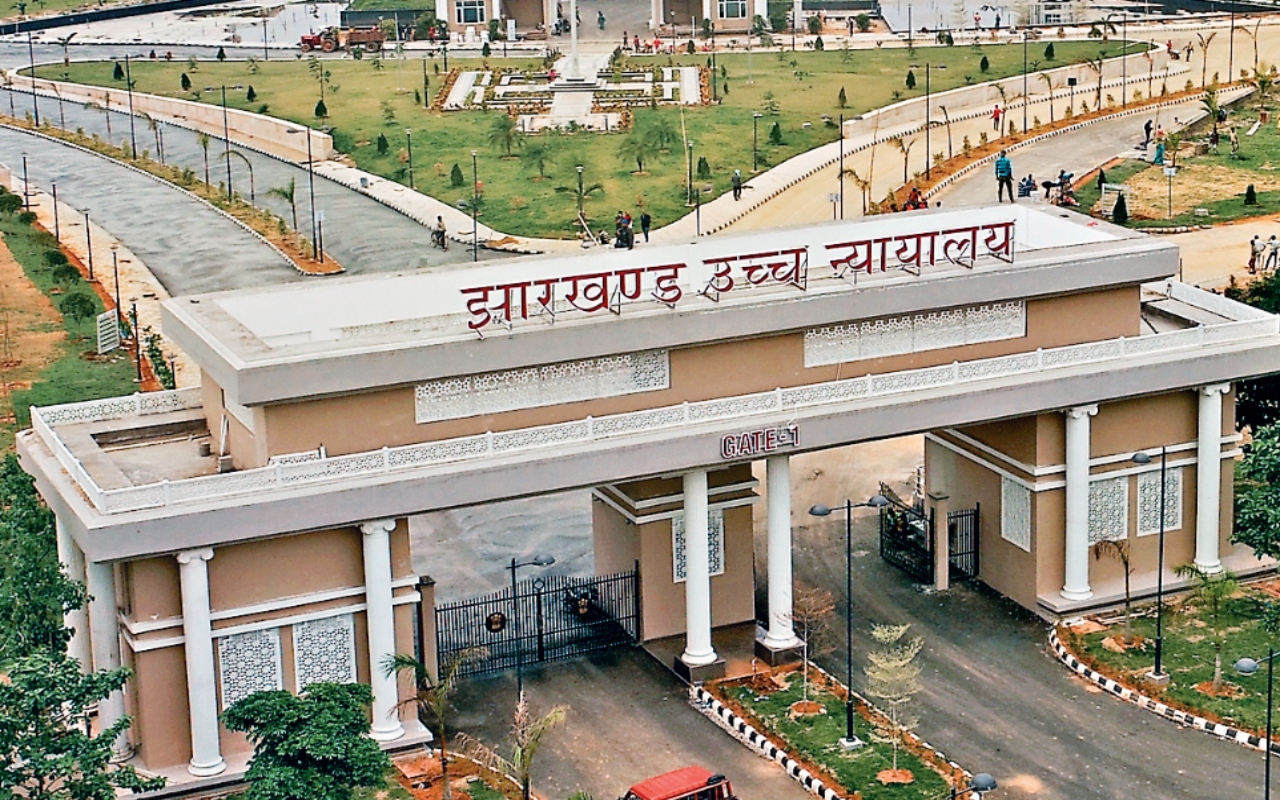
Jharkhand HC Takes Strong Stance Against Illegal Constructions in Jamshedpur

Jharkhand HC Takes Strong Stance Against Illegal Constructions in Jamshedpur

JNAC’s Practices and Governance Questioned, Deputy Municipal Commissioner Summoned
In a landmark hearing for PIL 2078/2018, the Jharkhand High Court, presided over by Justices Rangan Mukhopadhyay and Deepak Roshan, confronted the pervasive issue of illegal constructions in Jamshedpur head-on, casting a critical eye on the Jamshedpur Notified Area Committee’s (JNAC) actions and the city’s governance.
RANCHI – The courtroom witnessed a tense atmosphere as the JNAC’s advocate faced intense scrutiny from the High Court regarding the enforcement of the rule of law and the measures taken against unauthorized constructions.
Despite claims of addressing 62 buildings, the petitioner’s counsel argued that substantive remedial actions were lacking, with parking facilities remaining unreinstated and building layouts unaltered.
The absence of photographic evidence further weakened the JNAC’s position, shifting the focus to the petitioner’s argument, which delved into the historical context of the JNAC’s establishment and its alleged entanglement with corporate interests.
The courtroom fell silent as extensive lists of illegal constructions, obtained through RTI, were presented, painting a grim picture of the situation in Jamshedpur.
Expressing grave concern, the High Court summoned the Deputy Municipal Commissioner to the next hearing, demanding accountability and warning against any attempts to mislead the court.
The revelation of 1257 illegal constructions underscored the urgency of the matter, pointing to a systemic failure in governance and potential collusion among various stakeholders.
With the next hearing set for May 6, the High Court demanded the presence of the Special Officer of the JNAC to provide clarity on building map approval processes and justify the apparent laxity in curbing unlawful constructions.
The court’s directive to furnish a list of 20 buildings with significant deviations further highlighted its determination to restore legality and accountability in Jamshedpur’s urban landscape.
The petitioner’s counsel’s arguments, rooted in historical context and supported by RTI-obtained evidence, cast a shadow on the JNAC’s practices and the overall governance of the city.
As the legal battle unfolds, the High Court’s unwavering stance sends a strong message about the need for transparency, accountability, and adherence to the rule of law in Jamshedpur’s urban development.


Join Our Newsletter
Related News
Opinion
You May Also Like
Read More
Discussion
Readers' Comments
Recent
EDITOR PICKS
POPULAR POSTS
MUST READ

ABOUT US
Town Post is a leading News Portal of Jamshedpur and Jharkhand.
FOLLOW US
Contact us: editor@townpost.net
© Town Post, Jamshedpur