
Annual Migration of Dalma Elephants to Bengal Begins: Environment at a Crossroads

Annual Migration of Dalma Elephants to Bengal Begins: Environment at a Crossroads

Elephants in Dalma start their annual migration to neighbouring Bengal, bringing into focus human-wildlife interactions.
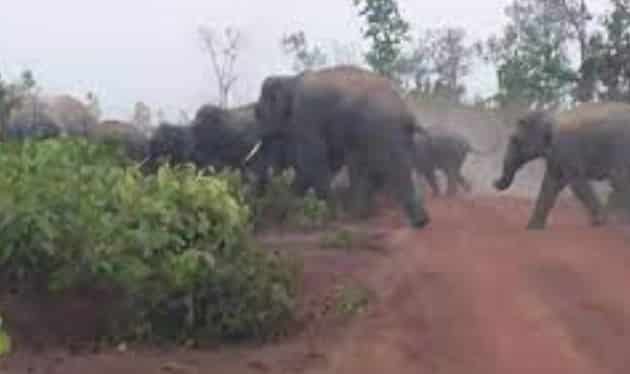
JAMSHEDPUR – The yearly migration of elephants from the Dalma Wildlife Sanctuary to the jungles of Bankura and West Midnapore in Bengal has commenced.
Around 100 of the sanctuary’s Asiatic elephants have begun descending the hills of the 102 square kilometre sanctuary, located approximately 30 km from Jamshedpur, ready to embark on their annual journey.
Over the last six months, the elephants have been residing in Dalma, with the first herd of approximately 15 elephants, including a few tusker calves, already on the move.
This herd has taken the corridor leading to the jungles of Midnapore and Bankura.
According to officials from the Dalma Sanctuary, elephants are creatures of habit, following established corridors each year.
Regardless of the size of the herd or the variation in their stops for food and water, the routes or elephant corridors remain consistent.
The herds generally head towards Bengal through Dhalbhumgarh and Seraikela-Kharsawan, using two main corridors – one from Jhunjki and the other from Burudih.
These corridors lead the elephants through various regions, with some favourite stopovers being the Jhunjki and Bitapur jungles in Seraikela.
Currently, migrating elephants are located at Suklara near Ghatshila and others in Nutandih. "During their journey, they also enjoyed a leisurely bath in a lake near Dimna," commented a forest staffer.
He added that elephants remaining in Dalma had descended the hills and were scattered around Bota, Konkadasa, and Dhobni, exploring the local villages for corn.
The migration of elephants to Bengal is dictated by their moods, and despite an abundance of food and water in Dalma, the animals gradually move on. The Dalma range office in Mango noted that the elephants usually return to Dalma by mid-February after leaving Midnapore and Bankura in December.
However, the annual migration of elephants also raises concerns about crop destruction. Elephants often venture into neighbouring agricultural fields in search of food. While the forest department has made provisions, such as water holes, salt licks, and sufficient food, the efforts have fallen short in preventing crop damage by these pachyderms, indicating a need for more robust solutions to manage human-elephant conflict.


Join Our Newsletter
Related News
Opinion
You May Also Like
Read More
Discussion
Readers' Comments
Recent
EDITOR PICKS
POPULAR POSTS
MUST READ

ABOUT US
Town Post is a leading News Portal of Jamshedpur and Jharkhand.
FOLLOW US
Contact us: editor@townpost.net
© Town Post, Jamshedpur