
Elephant from Migrating Herd Killed in Collision with Hatia Ranchi Express Train near Ichadih

Elephant from Migrating Herd Killed in Collision with Hatia Ranchi Express Train near Ichadih

Incident occurred between Ichadih and Latemda stations, disrupting train services and damaging railway infrastructure
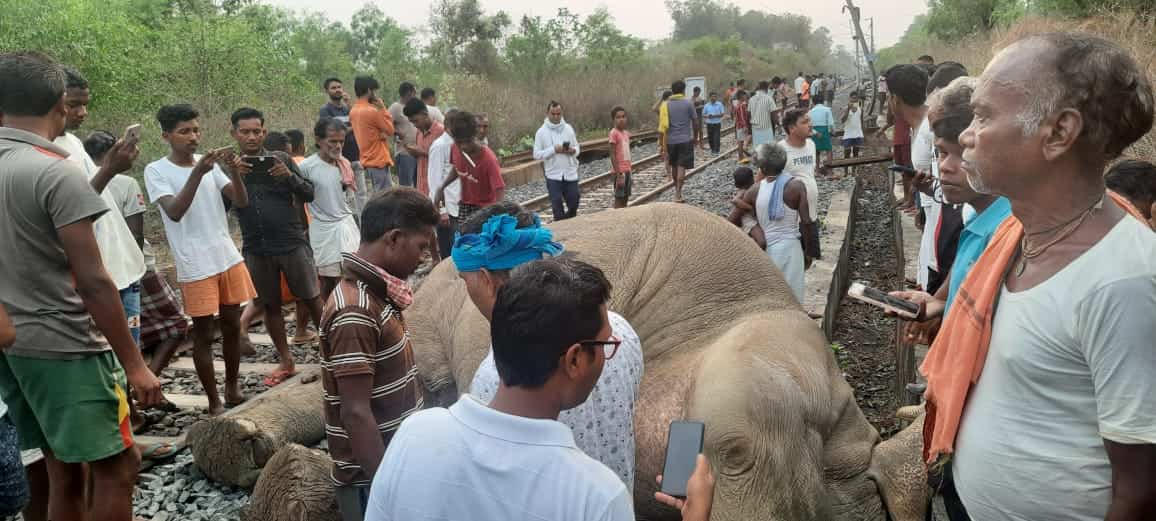
In a tragic incident, an elephant from a migrating herd was hit and killed by the Hatia Ranchi Express train between Ichadih and Latemda stations under the Muri division of South Eastern Railway.
JAMSHEDPUR – An elephant from a migrating herd met a painful death after being struck by the Hatia Ranchi Express train between Ichadih and Latemda stations in the Muri division of South Eastern Railway.
The collision, which occurred around 3:30 am, was so strong that it bent an iron bridge and broke 25,000 bolt wires, disrupting train services and causing the train to stop.
The herd, which had been wandering in search of food and water from the Dalma Wildlife Sanctuary and Ayodhya mountain of Purulia district, had taken shelter in the forest of Chhota Palas in Anda Seema village.
The incident took place when the herd was crossing the railway track in search of food.
The death of their comrade caused the other elephants in the herd to start shouting, frightening villagers in dozens of nearby villages.
As news of the elephant’s death spread, crowds started gathering at the remote rural railway track.
Chandil forest area officials and personnel arrived at the scene to assess the situation and remove the elephant’s carcass from the tracks.
A team of doctors was called to conduct a post-mortem examination of the elephant.
The negligence of the Forest and Environment Department has been blamed for making wild animals feel unsafe, as they are forced to venture onto railway tracks in search of food and water due to the lack of these resources in the forests.
The migratory herd had been camping near the Chandil Dam reservoir in fear of fire and in search of food, but the hustle and bustle of villagers have caused the wild animals to keep running away.
Deforestation and fires have contributed to making wild animals feel unsafe in their natural habitats.


Join Our Newsletter
Related News
Opinion
You May Also Like
Read More
Discussion
Readers' Comments
Recent
EDITOR PICKS
POPULAR POSTS
MUST READ

ABOUT US
Town Post is a leading News Portal of Jamshedpur and Jharkhand.
FOLLOW US
Contact us: editor@townpost.net
© Town Post, Jamshedpur