

Trade Unions Stage Nationwide Strike Against Four Labour Codes

Trade Unions Stage Nationwide Strike Against Four Labour Codes

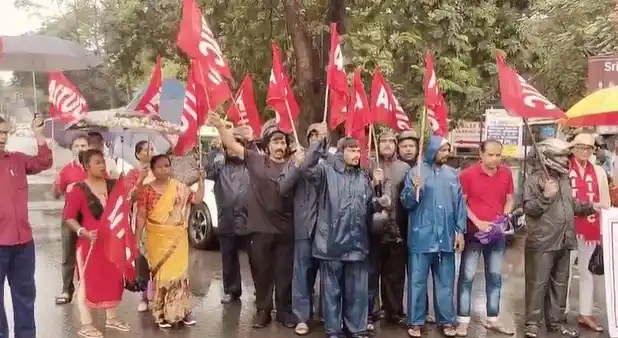
Workers March with Red Flags Despite Heavy Rain in Jamshedpur
Key Points:
- Joint trade unions protest central government’s privatization policies
- Leaders form human chain opposing new labour codes favoring industries
- Workers march from Aam Bagan area raising anti-government slogans
JAMSHEDPUR – Trade union leaders organized a nationwide strike on Wednesday protesting the implementation of four labour codes by the central government.
Joint trade unions called for the nationwide bandh across the country. Workers gathered at Aam Bagan area carrying red flags in solidarity. Moreover, protesters marched through streets despite heavy rainfall conditions.
Trade union leaders raised slogans against central government policies during demonstrations. They accused the government of transferring public assets to private hands. Besides, leaders criticized the replacement of existing labour laws with new codes.
The protesters argued that new labour codes benefit industrial houses unfairly. Workers’ rights face dilution under the revised legal framework according to union representatives. On the other hand, government policies allegedly favor corporate interests over worker welfare.
Trade union leader Ambuj Thakur participated in the protest demonstration actively. He joined other leaders in forming human chains across major roads. Furthermore, organized resistance highlighted workers’ concerns about policy changes.
Heavy rainfall could not deter determined protesters from expressing their opposition. Workers continued demonstrations throughout the day despite adverse weather conditions. However, their commitment to the cause remained unwavering during challenging circumstances.
The strike represents broader discontent with central government’s economic policies nationwide. Labor organizations across India coordinated similar protests against the new codes. Moreover, unified resistance demonstrates workers’ collective strength against policy changes.
Trade unions demand withdrawal of the four labour codes immediately. They argue that existing labour laws provided better protection for workers. Besides, new regulations allegedly weaken collective bargaining power of organized labor.
The demonstration reflects growing tensions between government and trade unions. Workers fear job security erosion under liberalized labour regulations. However, sustained protests may influence policy reconsideration by central authorities.
Union leaders pledged continued resistance until demands receive proper consideration. The nationwide strike demonstrates organized labor’s capacity for coordinated action. Moreover, public support for workers’ rights remains crucial for successful advocacy.


Join Our Newsletter
Related News
Opinion
You May Also Like
Read More
Discussion
Readers' Comments
Recent
EDITOR PICKS
POPULAR POSTS
MUST READ

ABOUT US
Town Post is a leading News Portal of Jamshedpur and Jharkhand.
FOLLOW US
Contact us: editor@townpost.net
© Town Post, Jamshedpur