

The 70 hour Workweek Debate

The 70 hour Workweek Debate
Global Opinions Split Over Narayana Murthy’s Controversial Proposal for India’s Economic Progress Amid Work-Life Concerns

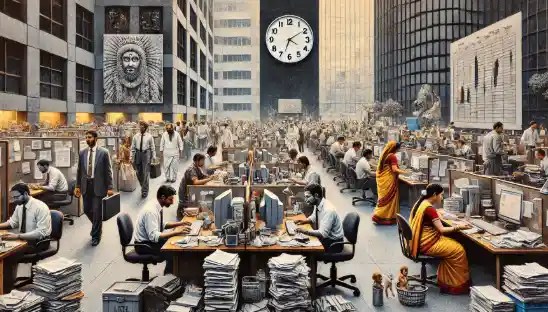
The 70-hour workweek debate continues to spark intense discussion in India, with opinions divided among industry leaders, politicians, and citizens.
While some see it as a catalyst for economic growth, critics warn of mental health issues, family disruptions, and health risks.
The 70 hour workweek debate is not seeing an end. The Infosys founder Narayan Murthy had proposed this in October 2023 for India to come up with terms of pressure of progress. Since then it has kept receiving diverse feedback.
The idea itself is against the ILO(International Labor Organization) but it is staying in the news by word of mouth.
The recent comment of Adani Group chairman Gautam Adani has brought this idea into focus. While he cited the negative aspect of this idea by mocking at the work-life imbalance it might bring forth.
Couple of days before him, the Zoho Corporation CEO Sridhar Vembu agreed to it but partially. He stated such work culture is difficult as it can bring India in the same vein as China which is struggling with the steep decline of demographic structure in the current times. They have kept practicing this work culture for generations.
Albeit there aren’t all who are against this proposal. Congress MP Manish Tiwari in support of it spoke about it giving examples of bureaucrats and lawyers working for long hours.
JSW chairman Sajjan Satija and OLA CEO Bhavish Aggarwal too have expressed their positive views for the 70 hour workweek.
The developed economies of Germany and Japan are considered as examples of the prolonged work hours but the culture difference makes it difficult for implementation.
While labor productivity of India is among the lowest, the challenges for implementation are more humongous than imagined.
Indians have at large a laid back attitude and indulgence in physical activities after a certain age usually constraints.
The issues of burnout, obesity might be on a surge from the worklife disequilibrium.
The long time work schedules may further add to disrupted family time and socializing opportunities. The prolonged absence from family and society may lead to complexities like divorces etc.
The enlarged work pressure might amount to mental health issues.
The jobs that require greater physical labor can lead to intoxication habits resulting in a deteriorating health graph.
The women managing childcare responsibilities might find it more difficult to cope up with this new work mode.
While many continue to believe, if the idea gets implemented in phases India shall certainly head towards a better economy. The employees shall get better on the spot skill development opportunities. Given the high percentage of workforce in India it might be a blessing in disguise.


Join Our Newsletter
Related News
Opinion
Read More
Discussion
Readers' Comments
Recent
EDITOR PICKS
POPULAR POSTS
MUST READ

ABOUT US
Town Post is a leading News Portal of Jamshedpur and Jharkhand.
FOLLOW US
Contact us: editor@townpost.net
© Town Post, Jamshedpur