
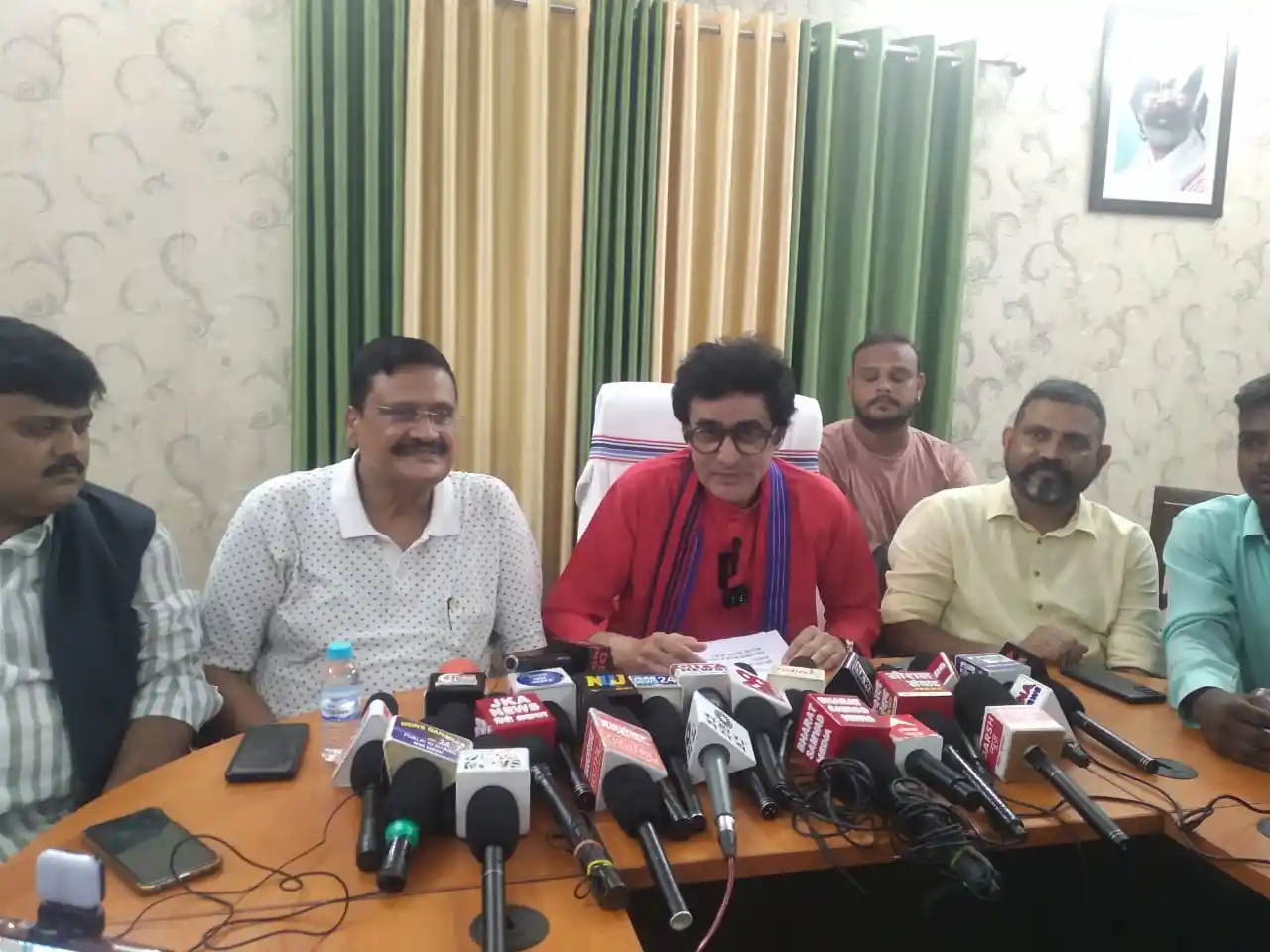
Dr. Ajoy Kumar slams BJP for 'politics of violence,' demands action

Dr. Ajoy Kumar slams BJP for ‘politics of violence,’ demands action

BJP Leaders’ Remarks Against Rahul Gandhi Draw Fierce Criticism
Key Points:
• Ex-MP Ajoy Kumar condemns BJP leaders’ statements against Rahul Gandhi
• Kumar alleges BJP central leadership behind inflammatory remarks
• Congress leader warns of public awareness about BJP’s tactics
JAMSHEDPUR – Former MP Dr. Ajoy Kumar has denounced recent statements by BJP-affiliated leaders targeting Rahul Gandhi, accusing the BJP of endorsing violent political tactics.
In a press release issued on Wednesday, Dr. Kumar expressed strong disapproval of the comments made by BJP’s Ravneet Singh Bittu and Shiv Sena (Shinde faction)’s Sanjay Gaikwad.
Moreover, he suggested that these inflammatory remarks were likely orchestrated by BJP’s central leadership.
The senior Congress leader pointed out the lack of action against Bittu and Gaikwad, calling it "an example of barbarism in democratic history."
Dr. Kumar emphasized the importance of maintaining non-violent and respectful political discourse in India.
Furthermore, he urged for stringent legal measures against those responsible for the controversial statements.
"This political behavior by the BJP is detrimental to our democratic values," Dr. Kumar asserted.
Additionally, he highlighted the growing support for Rahul Gandhi as a possible reason for BJP leaders’ frustration.
Dr. Kumar attributed the inflammatory remarks to recent electoral defeats faced by the BJP.
On the other hand, he noted the increasing popularity of Rahul Gandhi among the masses.
"BJP leaders have become increasingly frustrated with Rahul Gandhi’s ever-growing support base," Dr. Kumar explained.
Consequently, these comments have sparked widespread protests among Congress workers across the nation.
In conclusion, Dr. Kumar warned the BJP about the rising public awareness of the Modi government’s tactics.
He predicted that this awareness would impact the BJP’s performance in upcoming assembly elections.
Meanwhile, political analysts view this incident as a sign of intensifying political rivalries ahead of future polls.
A local political observer commented, "Such heated exchanges often precede major electoral battles in Indian politics."


Join Our Newsletter
Related News
Opinion
You May Also Like
Read More
Discussion
Readers' Comments
Recent
EDITOR PICKS
POPULAR POSTS
MUST READ

ABOUT US
Town Post is a leading News Portal of Jamshedpur and Jharkhand.
FOLLOW US
Contact us: editor@townpost.net
© Town Post, Jamshedpur