
Wolves Turn Man-Eaters in Bahraich: Disturbing Rise in Child Deaths Stuns Uttar Pradesh

Wolves Turn Man-Eaters in Bahraich: Disturbing Rise in Child Deaths Stuns Uttar Pradesh
Eight Children Killed, Many Injured as Wolves Attack Villages in Bahraich, Forest Officials Intensify Efforts
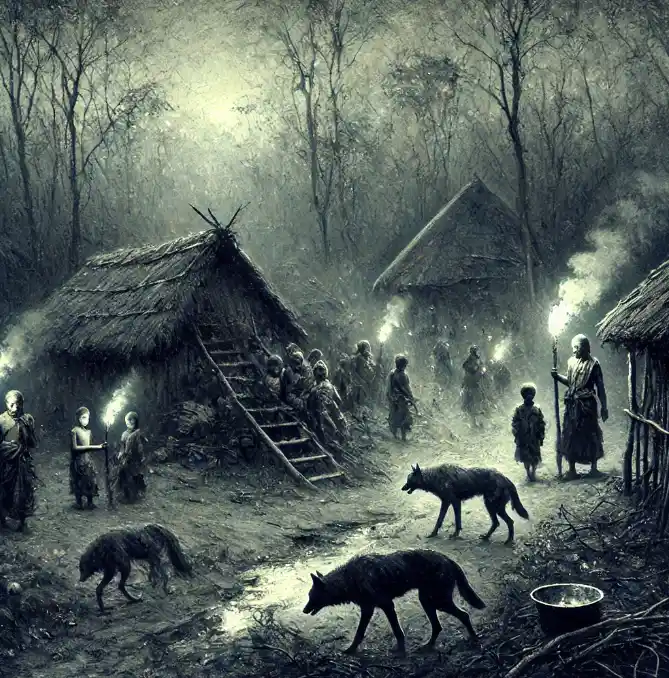
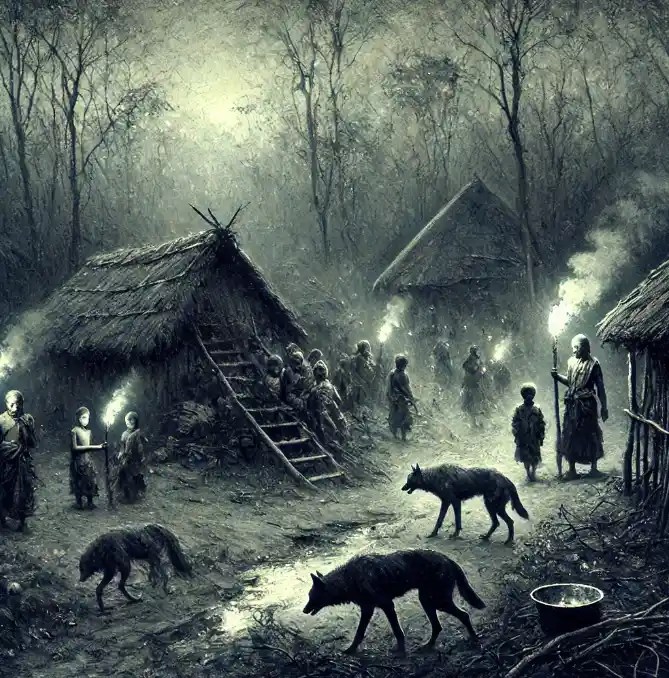
A rare surge of wolf attacks in Bahraich, Uttar Pradesh, has left 50,000 residents across 30 villages living in fear. Since July, eight children have lost their lives, while many adults have sustained severe injuries.

The incident of wolves turning to man-eaters in Bahraich, a district in Uttar Pradesh has taken everyone by surprise. Since July the wolves have claimed lives of about eight children along with giving severe injuries to many adults.
Commonly wolves make their habitats adjacent to human settlements and prey upon domestic animals like cows, buffaloes, hens, goats, rabbits ets. In the entire world the human deaths caused by wolf attacks are among the rarest few.
About 50,000 thousand people are staying under the fear of onslaught by the blood-thirsty wolves right now living in 25-30 different villages of this district.
Stories are surfacing from the past, that in 1996 the farmers had once thrown into fire the wolf-pups they discovered in a shallow cave scared of being attacked by the wolf packs. Similar story of 2003 has come into light where the farmers had destroyed the wolves natural habitats.
In the aftermath of both the incidents the wolves had preyed upon the human children. Several mouths whispering the revenge-theory of the wolves.
There is also a belief wolves don’t devour human flesh unless and until they taste it perchance. Hence grow a fondness in the course.
Whatever might be the reason even after some entrapments the terror hasn’t lessened. The administration and the forest officials have geared up by deploying a large number of forest officials and use of thermal drone cameras along with laying traps to catch the wolves.
This incident is a follow-up story of Kerala’s Wayanad district where two villages Chooralmala and Mundakkai were devastated in the wee hours of July 30 this year by enormous landslides triggered by torrential rains.
Wayanad has been a hotspot for trekkers and campers. It inhabits within itself seraphic waterfalls, caves, bird watching sites, large greenness to say a few about this dynamic tourist destination. Illegal mining, unregulated economic activity, deforestation is believed to have led to this near-apocalypse.
The amount of deaths and disasters in the latter is much more than Bahraich but these two incidents highlight the precarious balance of ecology at the present times and the realization of different degrees of how far the consequences can reach.
The population boom has led to the need for more resources and land for housing and other human needs like clothing, food etc.
The clearance of woodlands for making cultivable land, mines and factory wastes getting dumped in the water bodies are causing severe disproportions in nature. This is not just leading to inadvertent calamities but also there’s a rise of various diseases and ailments like skin disorders, breathing problems like asthma. The Covid-19 a zoonotic disease is also an example of ecology disparity.
The ecological imbalances relate to species extinction or substantial decrease and thus birthing gaps in the ecological pyramid or energy pyramid or trophic pyramid. These in the long run are aggravated by shrinking wilderness, rising pollution which not just reduces the life-span of humans but also the non-human kin.
Every ecosystem has its own unique characteristics of flora, fauna and animals(both vertebrates and invertebrates). The quality of the ecosystem is tracked and defined by these uniqueness. For example, we won’t use the same metrics and basics for evaluation of wellness for an oceanline and forest-covered valley.
Research says only 3% of earth remains ecologically intact i.e. they have healthy populations of its original species and habitat.
These imbalances end up in a term called ecology collapse. Ecology collapse corresponds to a condition when the ecosystem’s key biotic processes and features disappear due to environmental degradation or disruption of biotic interactions. And the condition is the tipping point from which reversal is absolutely impossible.
The first and till date declared ecology collapse is of Aral Sea located in Central Asia. This landlocked sea was in actuality the fourth largest lake in the world. It began shrinking in the 1960s due to the diversion of the rivers used for over-cotton harvest. With time the Aral Sea finally got cut-off from its source rivers and the ecology of the geography faced irreversible changes. It is now a land instead of a water body.
A geography that tended a land if turned to a water body bears no encouraging outcome. The same happens in the vice-versa situation.
Ecological imbalances need to be given more serious consideration in the coming times to prohibit any more loss of ecosystem. And thus the final disaster of ecology collapse.


Join Our Newsletter
Related News
Opinion
You May Also Like
Read More
Discussion
Readers' Comments
Recent
EDITOR PICKS
POPULAR POSTS
MUST READ

ABOUT US
Town Post is a leading News Portal of Jamshedpur and Jharkhand.
FOLLOW US
Contact us: editor@townpost.net
© Town Post, Jamshedpur