
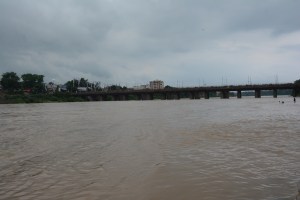
Jamshedpur Grapples with Water Crisis Amid Low River Levels

Jamshedpur Grapples with Water Crisis Amid Low River Levels

Contaminated Water Supply Affects Thousands of Residents
The declining water levels in local rivers have led to a severe water crisis in Jamshedpur, with several areas receiving contaminated water supply.
JAMSHEDPUR – A severe water shortage has hit Jamshedpur as river levels drop to their lowest in five years, causing widespread distribution of untreated water across the city.
Unfortunately, the lack of rainfall has caused a significant decrease in the water level of rivers. As a result, municipal bodies and Tata Steel UISL are facing challenges in treating and providing clean water to the residents.
Even though water is being lifted, it has become a challenge to treat it effectively.
The water treatment process is hindered because the use of chemicals or alum can only go to a certain extent without causing negative consequences.
Due to these circumstances, the availability of water treatment is restricted, leading to a lack of clean water in various regions.
It’s unfortunate that the residents of Jugsalai are currently facing a problem with their water supply. Approximately 50,000 people are being affected by the issue, as they are receiving water that is not clean.
The water is taken from the Kharkai River, but unfortunately, the low water levels make it too dirty to be treated properly.
Sumit Kumar, the Executive Engineer, and Jitendra Prasad, the SDO of the Mechanical Department, have expressed their concerns about the highly contaminated water, stating that it is extremely challenging to purify.
Even though we’ve tried using twice as much bleaching powder, the water is still dirty, and it’s not practical to continue using more bleaching powder.
Moreover, the water supply in the Mango Municipal Corporation areas is also contaminated.
The Executive Engineer of the water department in Mango has explained that the low levels of the river have led to an increase in the amount of silt in the water, making the treatment process less effective.
It seems like none of the treatment methods are working, and the only way the water supply can get better is if we have more rainfall.
Even areas serviced by Tata Steel UISL sometimes experience issues with the water supply, resulting in occasional dirty water.
Tata Steel UISL provides water to around 50,000 households, utilizing water sourced from the Subarnarekha River.
However, it has become challenging to clean the water because the levels in the Dimna Dam are low, which means we have to rely on river water.
People have been complaining about the water being dirty, and Tata Steel UISL admitted that the low river levels make the water very contaminated and difficult to clean.
In Birsanagar, the water supply in Moharda is also impacted, as it is currently experiencing the issue of lifting dirty water from the river.
The pollution in the river is causing a lot of problems, and even though Tata Steel UISL is working hard under the MoU with the government, it’s difficult to effectively treat the water.
Birsanagar has more than 11,300 connections, and the project was transferred to Tata Steel UISL in 2017.
Key Issues:
1. Low river levels hampering water treatment
2. Contaminated water supply in multiple areas
3. Ineffective filtration due to high silt content
4. Over 50,000 households affected in Jugsalai alone
Water Quality Concerns
Officials report significant challenges in treating the highly turbid river water:
“The water is so dirty that it’s difficult to clean. Treatment is not effective,” stated an engineer in the Jugsalai Municipal Corporation.
Areas Affected:
1. Jugsalai
2. Mango Municipal Corporation
3. Tata Steel UISL (formerly JUSCO) command area
4. Birsanagar-Moharuda water supply
Water Quality Standards
Ideal drinking water should meet these parameters:
Parameter | Ideal Range |
|
TDS |
100-250 ppm |
|
pH |
7-8 |
|
ORP |
-400 mV to -200 mV |
Current River Levels
The Subarnarekha and Kharkai rivers are at their lowest levels in five years:
Year | Subarnarekha | Kharkai |
|
2020 |
115.840 m |
124.380 m |
|
2021 |
116.780 m |
124.420 m |
|
2022 |
115.340 m |
124.340 m |
|
2023 |
115.180 m |
124.330 m |
|
2024 |
115.000 m |
124.130 m |
“We’re using double the amount of bleaching powder, but it’s still not enough to purify the water,” added one Municipal official in Jugsalai.
As the city awaits rainfall to replenish river levels, residents are advised to use additional filtration methods at home to ensure safe drinking water.


Join Our Newsletter
Related News
Opinion
Read More
Discussion
Readers' Comments
Recent
EDITOR PICKS
POPULAR POSTS
MUST READ

ABOUT US
Town Post is a leading News Portal of Jamshedpur and Jharkhand.
FOLLOW US
Contact us: editor@townpost.net
© Town Post, Jamshedpur