
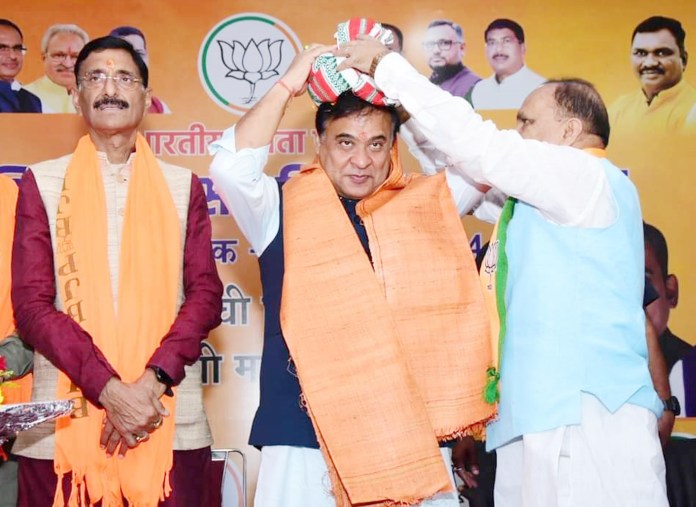
Assam CM Raises Alarm Over Demographic Shifts in Northeast and Jharkhand

Assam CM Raises Alarm Over Demographic Shifts in Northeast and Jharkhand

Himanta Biswa Sarma Calls for Action Against Alleged Infiltration, Proposes New Laws
BJP leader highlights concerns about changing population dynamics and their impact on tribal communities during Jharkhand visit.
RANCHI – Assam Chief Minister Himanta Biswa Sarma has sparked controversy with his recent statements on demographic changes in Assam and alleged infiltration in Jharkhand.
During a press conference in Jharkhand, Sarma claimed that Assam’s Muslim population has risen from 12% in 1951 to 40% today.
The BJP leader, who is co-in-charge for Jharkhand, described the demographic shift as a "matter of life and death."
Sarma alleged that Bangladeshi infiltrators are settling in large numbers in Jharkhand, particularly targeting tribal areas.
He criticized the JMM-Congress government led by Hemant Soren for inaction against alleged infiltrators marrying tribal women.
The Assam CM proposed Jharkhand-specific laws to address marriages between people of different religions, particularly involving migrants.
Sarma emphasized the need to safeguard the rights of Jharkhand’s women, especially those from tribal communities.
At a rally, he warned of ‘jamai tola’ (settlements of son-in-laws) emerging on land associated with tribal leader Bhagwan Birsa Munda.
The BJP leader referenced a Jharkhand High Court directive ordering the state government to identify and deport infiltrators.
Sarma challenged the Soren government to act on infiltration or step down, offering BJP’s readiness to address the issue if elected.
He drew parallels with his actions in Assam, stating he handles deportations "daily" in his home state.
These statements come as Jharkhand prepares for assembly elections later this year, potentially influencing the political discourse.
Sarma’s comments have reignited debates on migration, demographic changes, and their impact on local communities in eastern India.
Critics argue that such statements may polarize communities, while supporters view them as necessary for addressing security and cultural preservation concerns.


Join Our Newsletter
Opinion
Read More
Discussion
Readers' Comments
Recent
EDITOR PICKS
POPULAR POSTS
MUST READ

ABOUT US
Town Post is a leading News Portal of Jamshedpur and Jharkhand.
FOLLOW US
Contact us: editor@townpost.net
© Town Post, Jamshedpur