
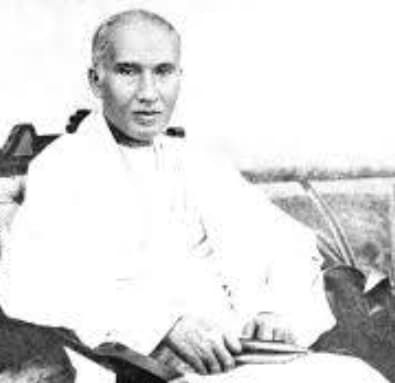
Pramatha Nath Bose: Pioneering Geologist Who Paved the Way for India's Industrial Growth

Pramatha Nath Bose: Pioneering Geologist Who Paved the Way for India’s Industrial Growth

Remembering the Visionary Contributions of PN Bose on His Birth Anniversary, May 12
Today, May 12, marks the birth anniversary of Pramatha Nath Bose (PN Bose), a remarkable geologist born in 1855 in Gaipur village, Nadia district, West Bengal, whose groundbreaking discoveries and vision played a pivotal role in shaping India’s geological understanding and industrial landscape.

JAMSHEDPUR – Pramatha Nath Bose, fondly remembered as PN Bose, stands as a towering figure in India’s geological exploration and industrial development, with his contributions leaving an indelible mark on the nation’s progress.
Born on May 12, 1855, in the humble village of Gaipur in West Bengal’s Nadia district, Bose’s journey to greatness began with his exceptional academic prowess.
In 1874, he secured the prestigious Gilchrist Scholarship, which took him to London, where he embarked on a six-year journey of learning, delving into the realms of Chemistry, Botany, Zoology, Geology, Physical Geography, and Logic.
Bose’s return to India marked the beginning of his illustrious career with the Geological Survey of India, which he joined on May 13, 1880, as a graded officer.
Throughout his tenure, he made several groundbreaking discoveries, including the identification of manganese deposits in Jabalpur district, coal in Darjeeling, copper in Sikkim, and petroleum in Assam.
Bose’s innovative spirit led him to introduce the study of micro-sections as an aid to petrological work within the Geological Survey of India, revolutionizing the field.
Beyond his geological pursuits, Bose’s vision extended to the realm of industrial development.
In 1886, he proposed the formation of a ‘Society for the Development of Indian Industries,’ which paved the way for the first Industrial Conference in 1891.
After his departure from the Geological Survey, Bose joined the service of Mayurbhanj State, where he made a discovery that would reshape India’s industrial landscape.
In 1904, he informed JN Tata about the vast iron ore deposits he had found at the Gorumahisani Hills in Mayurbhanj District, a revelation that proved instrumental in the establishment of Tata Iron and Steel Limited (TISCO) in 1907.
The Tatas, in recognition of Bose’s immense contributions, erected a bust in his memory in Jamshedpur on March 13, 1938.
The P.N. Bose Memorial, located near the Armoury Ground, stands as a testament to his enduring legacy and the indelible impact he made on India’s geological understanding and industrial growth.
As we commemorate PN Bose’s birth anniversary, let us remember the visionary geologist whose dedication, expertise, and foresight laid the foundation for India’s industrial revolution and continues to inspire generations of scientists and industrialists alike.


Join Our Newsletter
Opinion
Read More
Discussion
Readers' Comments
Recent
EDITOR PICKS
POPULAR POSTS
MUST READ

ABOUT US
Town Post is a leading News Portal of Jamshedpur and Jharkhand.
FOLLOW US
Contact us: editor@townpost.net
© Town Post, Jamshedpur