
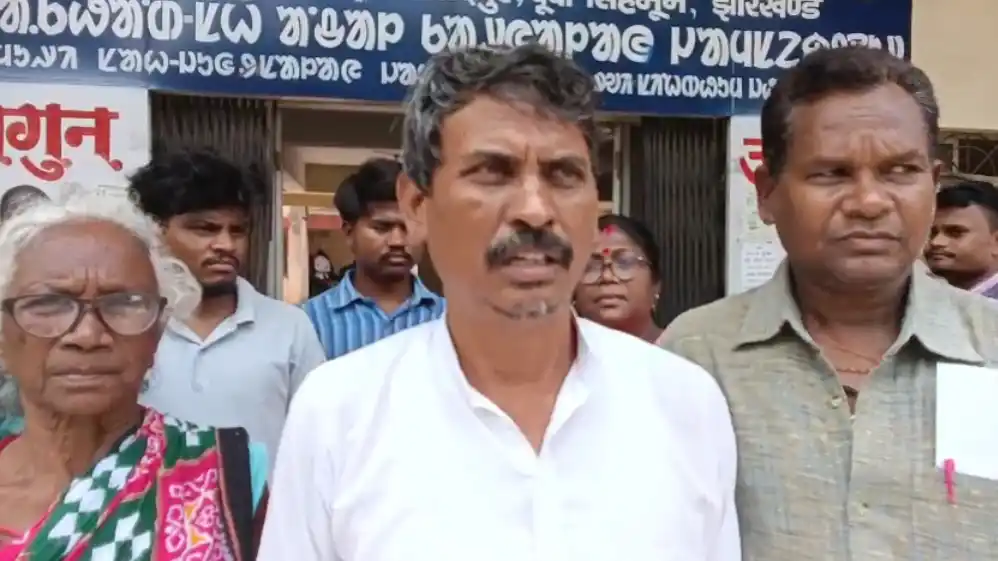
JMM Leaders Demand Action on Illegal Tribal Land Transfer

JMM Leaders Demand Action on Illegal Tribal Land Transfer

Kuna Ho Community Land Illegally Transferred in Kalimati Area
Key Points:
- Scheduled tribe land transferred violating Chotanagpur Tenancy Act
- JMM leaders submit documents to anchal officer demanding probe
- Previous assembly session raised similar concerns without action
JAMSHEDPUR – Jharkhand Mukti Morcha leaders have demanded immediate action against illegal transfer of tribal land in Kalimati village under Jamshedpur anchal area.
The case involves plot number 02 under khata number 1163. Land belonging to Kuna Ho and other scheduled tribe communities was transferred. However, the transfer violated the Chotanagpur Tenancy Act provisions.
JMM district coordination committee member Sagen Purti met the anchal officer. Former block president Bahadur Kisku accompanied him during the meeting. Moreover, they submitted land documents demanding thorough investigation.
The tribal land was illegally transferred to non-tribal individuals. This practice undermines constitutional protections for scheduled communities. Meanwhile, officials allegedly facilitated these unauthorized transactions.
Purti emphasized the gravity of removing tribal identity markers. He stated that such land transactions constitute direct attacks on tribal rights. Furthermore, these activities violate existing legal frameworks completely.
The JMM leader had previously raised this issue. The matter was presented in the 2023-24 budget session. However, Minister Ramdas Soren had assured assembly action then.
The government had promised comprehensive investigation into land transfers. No concrete steps have been taken despite assurances. Besides, similar cases continue occurring across the region.
Kisku alleged departmental officials’ complicity in illegal transfers. He stated such large-scale violations require administrative cooperation. Moreover, systematic investigation must identify all guilty parties.
The leaders demanded strict action against all involved officials. They emphasized the need for exemplary punishment. Meanwhile, the legal framework exists to prevent such violations.
The Chotanagpur Tenancy Act specifically protects tribal land rights. These provisions prevent unauthorized transfers to non-tribal individuals. However, ground-level implementation remains inadequate across the state.
JMM leaders have adopted a firm stance on this issue. They demand immediate administrative intervention in the case. Furthermore, broader systemic reforms are necessary to prevent future violations.
The case raises serious questions about tribal land protection. Constitutional safeguards appear ineffective at grassroots level. Besides, administrative machinery requires complete overhaul for proper implementation.
Government and administration face mounting pressure for decisive action. The tribal community expects swift justice in this matter. However, political will remains crucial for meaningful change.


Join Our Newsletter
Related News
Opinion
You May Also Like
Read More
Discussion
Readers' Comments
Recent
EDITOR PICKS
POPULAR POSTS
MUST READ

ABOUT US
Town Post is a leading News Portal of Jamshedpur and Jharkhand.
FOLLOW US
Contact us: editor@townpost.net
© Town Post, Jamshedpur