
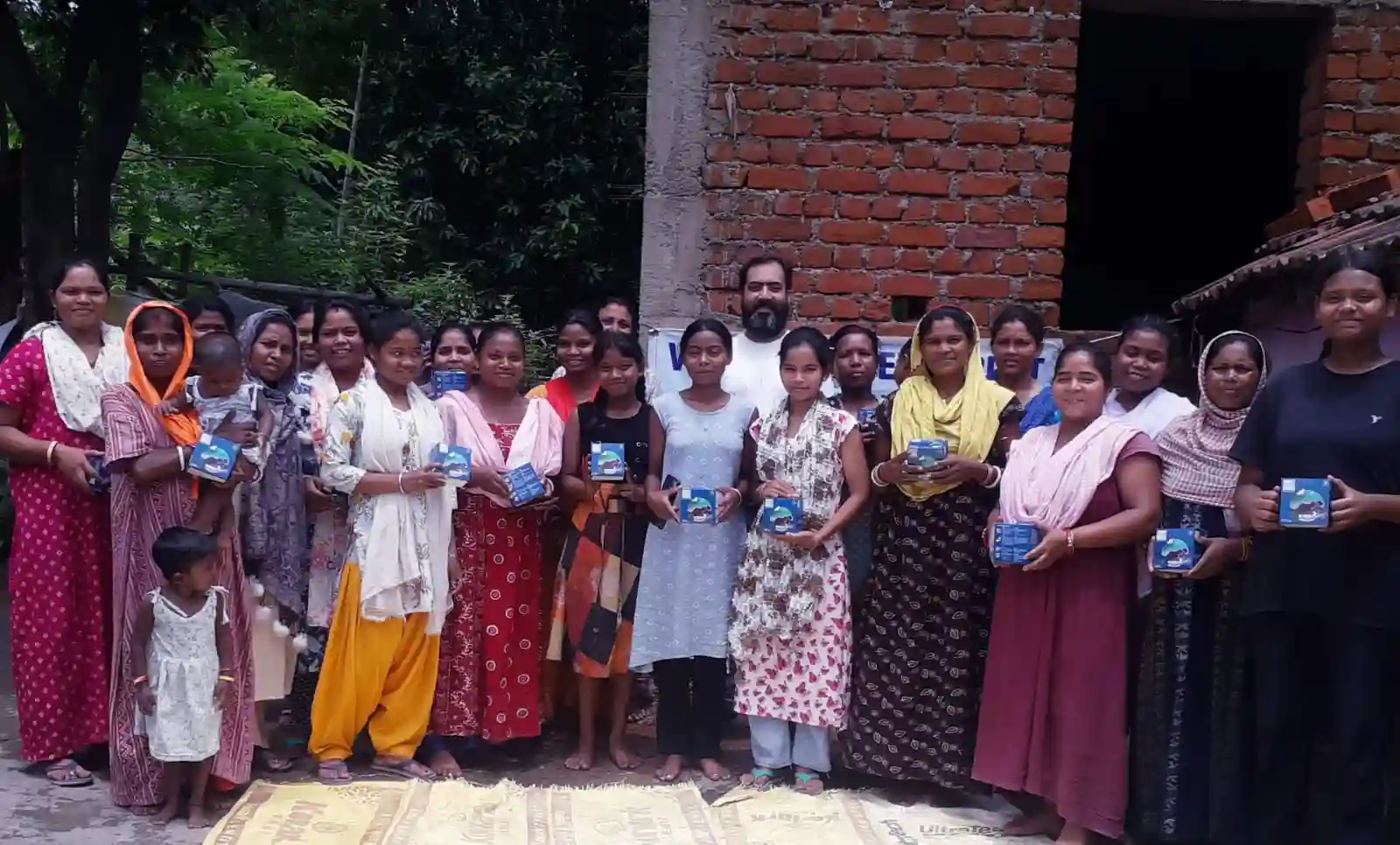
Barigora Hosts Menstrual Awareness Program by Vishwa Jan Seva Trust

Barigora Hosts Menstrual Awareness Program by Vishwa Jan Seva Trust

Dr. Manish Jha leads initiative to distribute free sanitary pads and educate women
Key Points:
- Trust founder organizes monthly cycle awareness campaign in village
- Free sanitary pad distribution targets misconceptions about periods
- Community volunteers actively support women’s health education efforts
JAMSHEDPUR – Vishwa Jan Seva Trust conducted a commendable social program in Barigora focusing on menstrual health awareness and free sanitary pad distribution among local women.
Dr. Manish Jha, the trust’s founder, spearheaded the “Monthly Cycle Awareness Program.” The initiative aimed at eliminating myths surrounding menstruation. Moreover, it sought to provide accurate information to adolescent girls and women.
The program specifically targeted misconceptions about periods that persist in rural areas. Additionally, it emphasized the importance of maintaining proper hygiene during menstruation. Women and girls received free sanitary pads during the event.
Three dedicated volunteers played crucial roles in the program’s success. Sukumati Samad provided active support throughout the initiative. Similarly, Rimil Soy contributed significantly to community outreach efforts. Furthermore, Sushmita Hembram engaged directly with beneficiaries.
These volunteers conducted personal conversations with attending women. They motivated participants to maintain caution during menstrual cycles. In addition, they stressed the importance of proper hygiene practices.
Dr. Jha emphasized the program’s core mission during the event. “Our objective is helping village daughters and women overcome menstrual misconceptions,” he stated. He further added that the initiative aims to make women health-conscious.
The trust demonstrated its commitment to continued community service. Officials announced plans for organizing similar programs in the future. This represents a sustained effort toward women’s health education in rural areas.
Rural women often face challenges accessing menstrual health information. Social taboos frequently prevent open discussions about periods. However, initiatives like this help break traditional barriers.
The program addressed both educational and practical needs simultaneously. While providing information, it also distributed essential hygiene products. This dual approach ensures immediate impact and long-term awareness.
Community-based health programs have proven effective in rural settings. They create local ownership and sustainable behavioral changes. Moreover, they address specific cultural and social contexts.


Join Our Newsletter
Opinion
You May Also Like
Read More
Discussion
Readers' Comments
Recent
EDITOR PICKS
POPULAR POSTS
MUST READ

ABOUT US
Town Post is a leading News Portal of Jamshedpur and Jharkhand.
FOLLOW US
Contact us: editor@townpost.net
© Town Post, Jamshedpur