
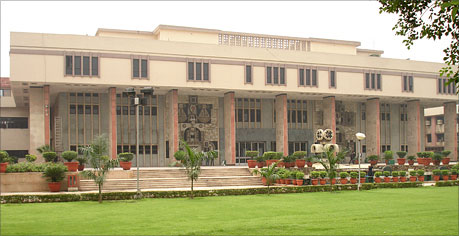
Delhi High Court Rejects Plea for Euthanasia in Vegetative State Case

Delhi High Court Rejects Plea for Euthanasia in Vegetative State Case

Court Cites Legal Limitations in Refusing to Consider Passive Euthanasia for Long-Term Patient
The Delhi High Court’s decision highlights the complex legal and ethical considerations surrounding end-of-life care in India.
NEW DELHI – A plea to establish a medical board to investigate the possibility of euthanasia for a man in a prolonged vegetative condition was denied by the Delhi High Court.
In his decision on July 2, Justice Subramonium Prasad highlighted the legal restrictions that prohibit the court from getting involved in these kinds of situations.
"The petitioner is living without mechanical support. No one, including physicians, is permitted to cause death, even to relieve suffering," Justice Prasad stated in his order.
Case Background
The 30-year-old Harish Rana, a former student of Punjab University, filed the appeal on his behalf. After suffering a fall in 2013, Rana became bedridden.
Rana’s parents asked the court to step in and explore passive euthanasia, citing their aged caring challenges and their unresponsive son.
"Our son has not shown any response in 11 years. We’ve exhausted all treatment options," Rana’s father explained, highlighting the family’s emotional and physical toll.
Legal Constraints
The court referred to the Supreme Court’s judgment in Common Cause v Union of India, which deems active euthanasia legally impermissible.
"While we sympathize with the parents, the petitioner is not terminally ill. This court cannot consider a legally untenable prayer," Justice Prasad remarked.
Medical and Ethical Considerations
The court noted that Rana is not on life support and can sustain himself without external aid, a crucial factor in the decision.
Dr. Anand Kumar, a medical ethicist not involved in the case, commented, "These situations challenge our legal and ethical frameworks, highlighting the need for clearer guidelines in end-of-life care."
Broader Implications
The case has reignited discussions on euthanasia laws in India.
"This ruling underscores the complexities in balancing patient rights, medical ethics, and legal boundaries," noted Advocate Priya Sharma, a healthcare law specialist.
As the debate continues, the Rana family’s plea brings attention to the challenges faced by families caring for patients in persistent vegetative states, prompting calls for more comprehensive end-of-life care policies.


Join Our Newsletter
Opinion
You May Also Like
Read More
Discussion
Readers' Comments
Recent
EDITOR PICKS
POPULAR POSTS
MUST READ

ABOUT US
Town Post is a leading News Portal of Jamshedpur and Jharkhand.
FOLLOW US
Contact us: editor@townpost.net
© Town Post, Jamshedpur