
XLRI Jamshedpur Hosts Doctoral Colloquium on Artificial Intelligence and Sustainability

XLRI Jamshedpur Hosts Doctoral Colloquium on Artificial Intelligence and Sustainability

Platinum Jubilee Celebrations witness 117 paper submissions from 5 countries
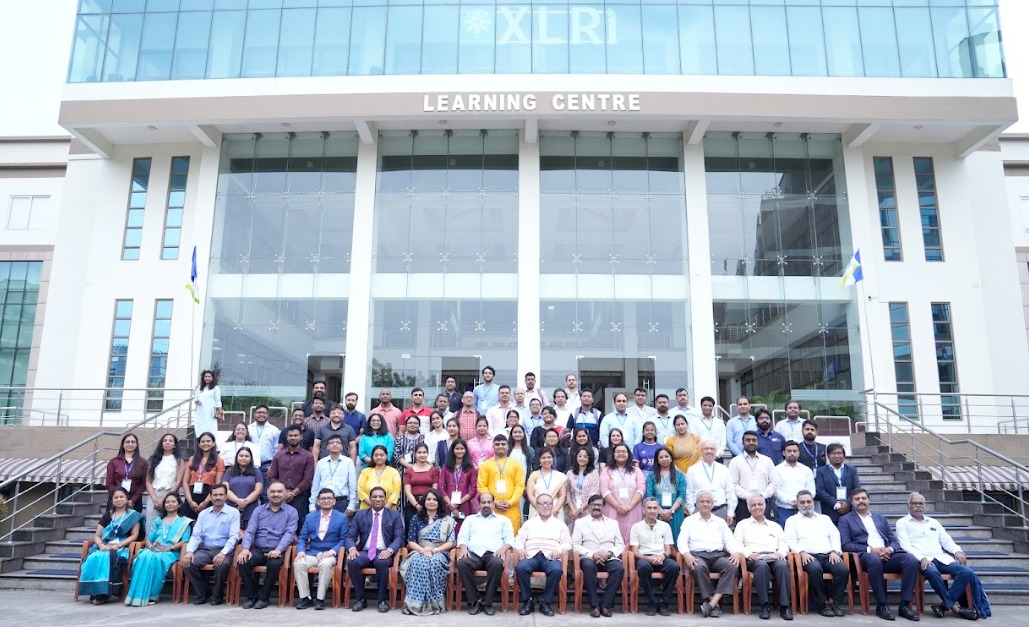
XLRI Jamshedpur hosted a three-day Doctoral Colloquium from April 8-10 as part of its 75th Year Platinum Jubilee Celebrations, focusing on the theme "Artificial Intelligence and Sustainability."
JAMSHEDPUR – XLRI’s 3-day Doctoral Colloquium from April 8-10 discussed AI and Sustainability in detail.
The colloquium received 117 paper submissions from India, Nepal, Oman, Spain, and the UK, out of which 62 papers were invited for presentations by doctoral scholars from XLRI Jamshedpur and other universities and institutions.
The inaugural event, held on April 8, was introduced by Prof. Prashant Kumar, Convener of XLRI Doctoral Colloquium and Associate Professor of Marketing at XLRI Jamshedpur.
Emphasis on Societal Impact and Relevance
In his welcome address, Fr. George Sebastian S.J., Director of XLRI Jamshedpur, emphasized the need for research to have societal consequences and for academics to focus on the broader societal needs of the hour.
"Meaningful research is particularly important given the nascent nature of Artificial Intelligence in Research," said Dr. Sanjay Patro, Dean of Academics at XLRI Jamshedpur, sharing examples of various use cases of AI from the industry and the need to study their implications in academic articles.
Workshops and Paper Presentations
The colloquium featured seven workshops covering topics such as revising and resubmitting in top journals, writing conceptual articles, developing constructs in the Indian context, innovative teaching pedagogies, game theory and computerized lab experiments, and signals and spillover.
"Scholars should focus on ticking their publication requirements in the early years of their research," advised Prof. Rajendra Nargundkar, Vice-Chancellor of Prestige University, Indore, emphasizing the need to balance quality and quantity in research.
The 62 papers presented at the event were divided across seven tracks and 14 paper presentation sessions.


Join Our Newsletter
Related News
Opinion
You May Also Like
Read More
Discussion
Readers' Comments
Recent
EDITOR PICKS
POPULAR POSTS
MUST READ

ABOUT US
Town Post is a leading News Portal of Jamshedpur and Jharkhand.
FOLLOW US
Contact us: editor@townpost.net
© Town Post, Jamshedpur