
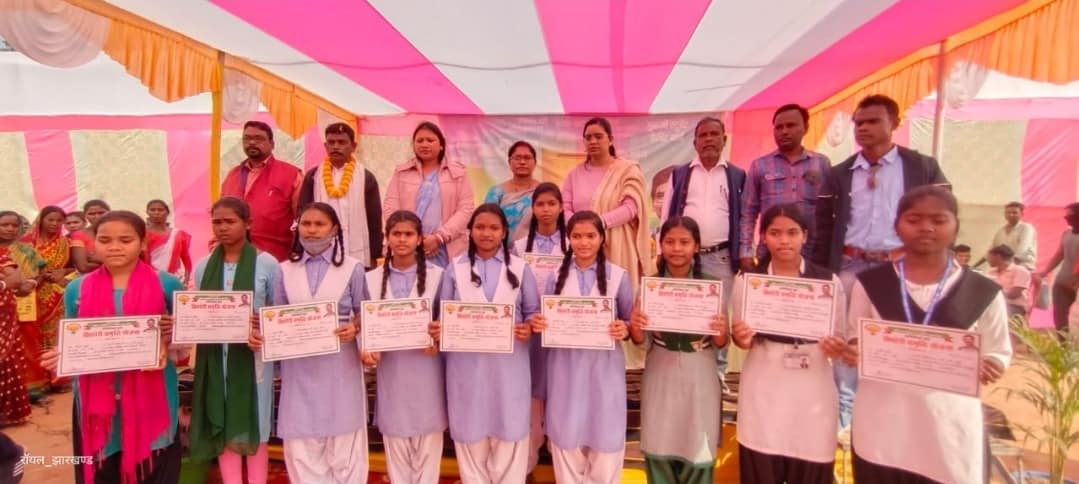
Aapki Sarkar Welfare Program Reaches Final Stage in Jamshedpur

Aapki Sarkar Welfare Program Reaches Final Stage in Jamshedpur

‘Aapki Yojana, Aapki Sarkar, Aapke Dwar’ Benefits Millions in Jamshedpur
Jharkhand’s innovative welfare program to conclude tomorrow, delivering government schemes directly to citizens, under MLA’s supervision.
JAMSHEDPUR -The ‘Aapki Yojana, Aapki Sarkar Aapke Dwar’ program in Jamshedpur, aimed at ensuring the reach of government welfare schemes to every eligible citizen, is nearing its conclusion.
On Monday, 25th December, Panchayat level camps are being organized in two blocks, marking a significant step in the program’s final stage.
This grassroots initiative, started on 24th November and set to conclude on 26th December, focuses on making public welfare schemes accessible to all.
The MLA of the area, Mangal Kalindi, personally inspected and reviewed the program’s effectiveness in delivering its objectives.
In Dungri Tola ground of Parsudih Central Haldwani Panchayat, despite being a holiday, the program was organized to benefit villagers in its last phase.
Kalindi highlighted that this third phase of the program has been successful in reaching the grassroots level, even during challenging times like the Corona period, benefitting around 36 lakh people.
The Panchayat level camps, held in 7 Panchayats across 5 blocks, saw participation from honorable MLAs who distributed assets among beneficiaries.
Efforts were made to ensure that no deserving individual misses out on the benefits of the government’s schemes.
District Magistrate cum Deputy Commissioner Mr. Manjunath Bhajantri stated that the program’s goal is to directly deliver government welfare benefits to the public.
Various schemes were approved on-the-spot in these camps, with stalls set up to inform about and facilitate access to diverse schemes like Abua Awas Yojana, Guruji Student Credit Card Scheme, and Sarvajan Pension Scheme.
Environmental protection was also a focus, with the distribution of fruit plants to encourage tree planting.
The program has evolved significantly, with the second phase benefitting 56 lakh people, and the current phase aiming to reach even more.
Kalindi emphasized that schemes which were previously challenging to implement, such as pensions and scholarships, are now more readily accessible to beneficiaries.


Join Our Newsletter
Related News
Opinion
Read More
Discussion
Readers' Comments
Recent
EDITOR PICKS
POPULAR POSTS
MUST READ

ABOUT US
Town Post is a leading News Portal of Jamshedpur and Jharkhand.
FOLLOW US
Contact us: editor@townpost.net
© Town Post, Jamshedpur