
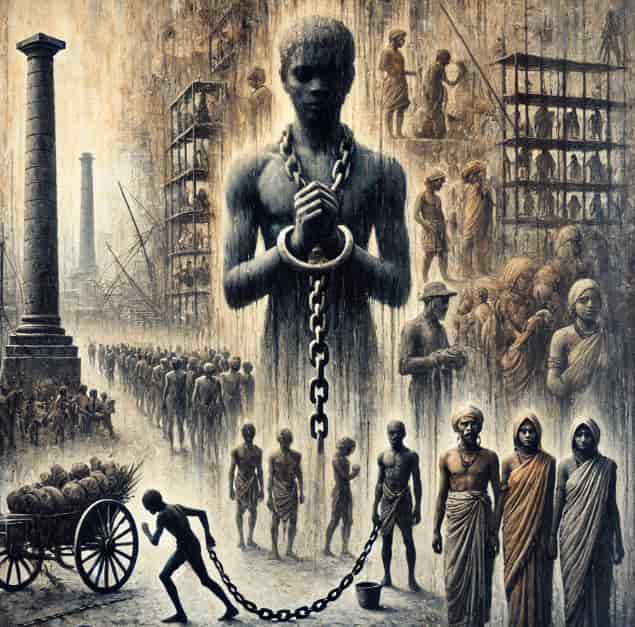
International Day for Abolition of Slavery: History, Impact, and Modern Forms

International Day for Abolition of Slavery: History, Impact, and Modern Forms
Commemorating Decades of Efforts to Eradicate Slavery, From Historical Practices to Modern Exploitation
The International Day for the Abolition of Slavery on December 2 highlights global efforts to end slavery. From historical transatlantic trade to modern forms of forced labor, the day urges action against exploitation.

Slavery is one of the most shameful chapters of the human race.
On December 2, 1949 General Assembly of the United Nations Convention adopted the goal of the Suppression of the Traffic in Persons and of the Exploitation of the Prostitution of Others(resolution 317(4)).
In honour of this day the United Nations General Assembly established this day in 1986. Since then 2nd December is observed as the International Day for the Abolition of Slavery. The day began with the objective to culminate practice of any form of slavery around the world societies.
RISE OF SLAVE TRADE
Beginning from the 16th century its history spanned across continents and cultures. The translantic slave trade took place from the 16th to the 19th century. It involved transport of enslaved Africans across the Atlantic ocean to the Americas.
During the Middle Passage, the transport of enslaved Africans continued.
HSITORY OF SLAVE TRADE IN INDIA
In India, the history of slavery dates back to the Ashoka era. They were called dasas or dasyu. Slavery spread more during the Muslim rule over the Indian subcontinent. The Indians were captivated and exported as slaves to Central Asia and West Asia.
After India became a British colony, a new chapter of slavery began in India. It included chattel slavery. This form of slavery treated people as personal property and could be bought and sold like livestock. During this period, the Portuguese imported African slaves into their Indian colonies on the Konkan coast.
In the 1830s, the British abolished chattel slavery. This led to the emergence of a system of indentured Indian labor. For more than a century, more than a million Indians, called as girmitiyas, were forced to several European colonies across Africa, the Indian Ocean, Asia, and the Americas to work on slave labor dependent plantations and mines.
These indentured labourers or the girmitiyas were inflicted to the inhuman conditions and minimal freedom. In 1843, the Indian Slavery Act was passed under Lord Ellenborough, the Governor-General of India. The act stated the sale of a person as a slave was banned, anyone performing it would be considered as to offend law and shall be prosecuted under the law. Though effectiveness of the Act remained debatable among the historians.
In 1835, the Indian Penal Code was drafted and finally came into force on Jan 1st, 1860. It prohibited kidnap or abduct of people for forcing them into slavery.
In 1976, The Bonded Labour System(Abolition) Act was passed to further abolish the bonded labor system in India.
SHIFT OF SLAVERY TO MODERN SLAVERY
As per the UN reports slavery hasn’t ended. Slavery is has now changed form and is called modern slavery. Several urgencies like climate migration, war exodus, extreme poverty, lack of employment opportunities make vulnerable situations for slavery to keep thriving in the present times.
Slavery appears in the various types of exploitation such as underpaid or forced labor,child or forced marriage, debt bondage, human trafficking. Children and women fall vulnerable to these conditions.
MODERN SLAVERY IN INDIA
According to the Global Slavery Index 2023 report by an international human rights group Walk Free as on any anonymous day of 2021, 11 million individuals could be identified to be practicing modern slavery.
It is as if the Zamindari system seems to loom in the shadow of this new form of slavery. The employees force the workers to work for longer hours with underpayment. Even when child labor was abolished in 1986, children are still made to work to provide food for their families in various venues like glass-factories, brick-kilns, and domestic service.
Given improper meals, longer work hours, hazardous environments cause irreversible losses on their health. In the regions of insurgencies they are either by force or by lure of better life, are enlisted in the army or used to do risky or low-skilled jobs such as cooking, spying, carrying weapons or are used as human shields during the wars.
Victims of human trafficking, the displaced people in need of survival take up improper labor jobs. In the illegal mining sites, tea production, textile or garment factories. Working at low pay the workers are forced to abide by the restrictions of the employers.
Organ removal rackets too flourishes under the umbrella of human trafficking. Brought in unknown places they are subjected to this heinous crime in their non-consent and unknownness.
The trafficked females mostly become victims of the sex rackets operating in hotels, massage parlors, and private residences. The children too are drawn in to meet the demands of sex trade.
The inability of the poor households to meet the basic needs of the family members propels them to marry off their daughters in exchange of money or to lessen their own burden.
The re-pledge to end slavery in its every tangible and intangible form might create the ample awareness to eradicate this malpractice from the roots.


Join Our Newsletter
Opinion
You May Also Like
Read More
Discussion
Readers' Comments
Recent
EDITOR PICKS
POPULAR POSTS
MUST READ

ABOUT US
Town Post is a leading News Portal of Jamshedpur and Jharkhand.
FOLLOW US
Contact us: editor@townpost.net
© Town Post, Jamshedpur