
GRE and GMAT: Overseas Education Goals Fueling Indian Brain Drain and Forex Loss

GRE and GMAT: Overseas Education Goals Fueling Indian Brain Drain and Forex Loss
Indian Students’ Pursuit of Foreign Degrees Poses Economic and Educational Challenges
With 13 lakh Indian students enrolling in foreign universities in 2024, India faces a $6 billion forex loss and rising brain drain. The Vice-President highlighted systemic issues and called for strengthening domestic educational infrastructure.

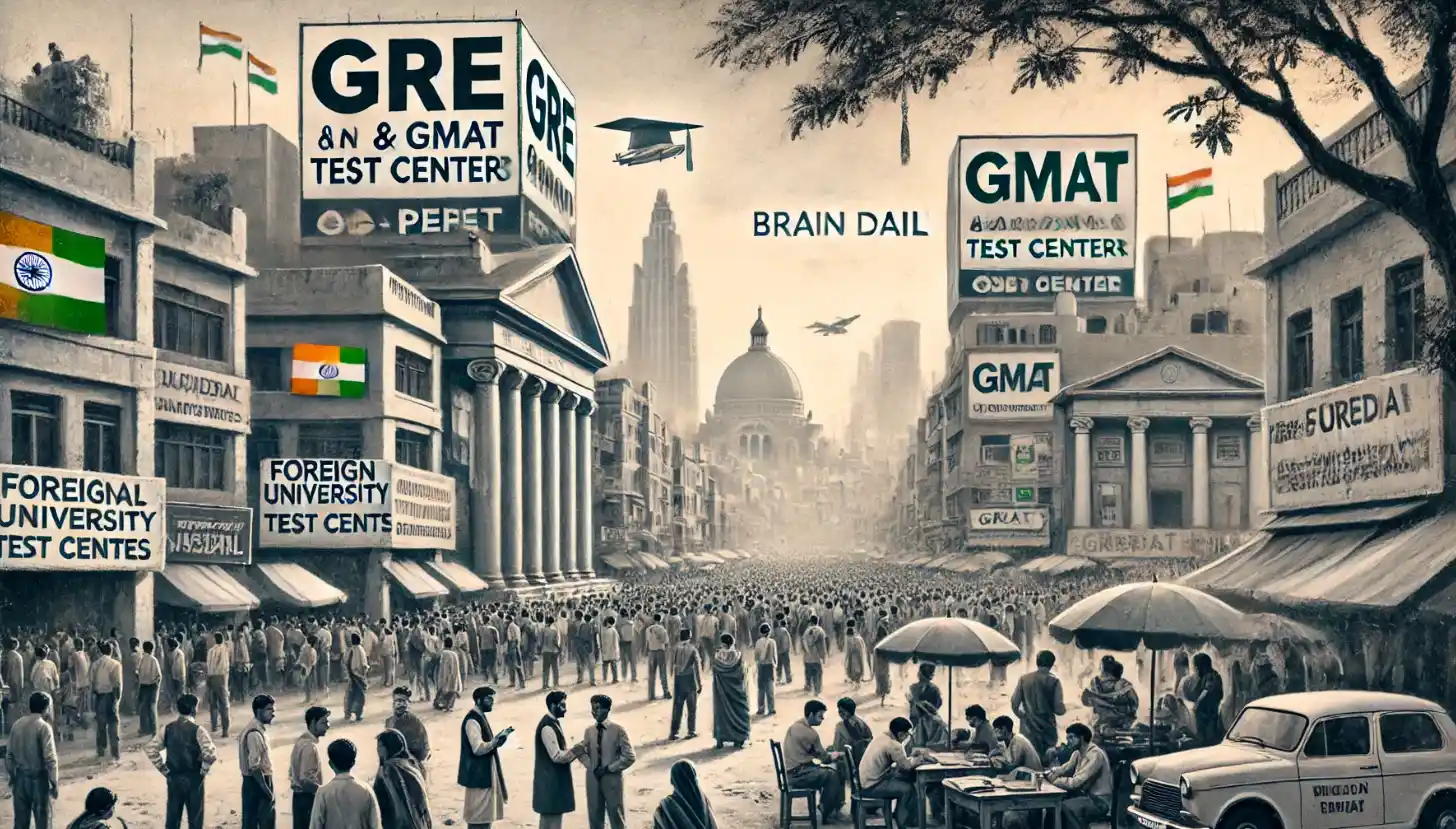
October brings forth the GRE(Graduate Record Examination) test dates. The goal: attaining a seat in an overseas college. GMAT(Graduate Management Admission Test) is another such platform for the aspirant student to get admission in foreign universities.
Both the GRE and GMAT can be appeared both from their home’s comfort or at the assigned test centers sprawled throughout the country. These gateways easily lure the students for getting seats in the foreign universities. Here the saying ‘things owned by other people look good’ come into play.
Our Vice-president Mr. Jagdeep Dhankhar brought this matter into the limelight speaking at a Rajasthan’s school function. He spoke about the forex and brain drain. In 2024, 13 lakh students have opted for foreign universities creating a hole 6 billion US Dollars in the Indian economy. V-P grossly reflected the situation as “ the new disease among children”.
If we talk about the Indian education system it has changed by leaps and bounds from the gurukul days to the commercialization in the present times.
The present times have seen an unexpected growth of schools. Adding to the horror, few of them operate without affiliation in absence of strict laws. It is an arduous task for parents to get their children admitted in kindergarten schools. The lottery system, unjustified high fees structure further adding boatloads of pressure on them.
Adding to the above issue is the lack of good institutions for higher studies in the rural areas. The Tier 2 and Tier 3 city students too face the same kind of dilemma. The number of prestigious institutes are mostly centered around the larger cities and hence the competition is too tough for the limited number of seats.
This turns many students in search of other options. The catchy advertisements of the institutes and the several mediator consultant organizations working with the sole purpose of profit-making also guide these students to secure their admission in different abroad colleges. Sometimes this leads the students to fall into unpleasant and breach of law situations.
The educational institutes of India don’t have any provision of shepherding their students at the end of term in their individual higher education and career guidance.
Mostly the students are unaware of the vast employment opportunities through humanities and commerce streams along with the vocational courses. These subjects too have the capacity to garner better employment opportunities rather than the traditional science-related and administrative jobs, as believed earlier.
It’s high-time to improve the situation by building better infrastructure for prohibiting the students from opting for overseas education in the coming times.


Join Our Newsletter
Related News
Opinion
Read More
Discussion
Readers' Comments
Recent
EDITOR PICKS
POPULAR POSTS
MUST READ

ABOUT US
Town Post is a leading News Portal of Jamshedpur and Jharkhand.
FOLLOW US
Contact us: editor@townpost.net
© Town Post, Jamshedpur