
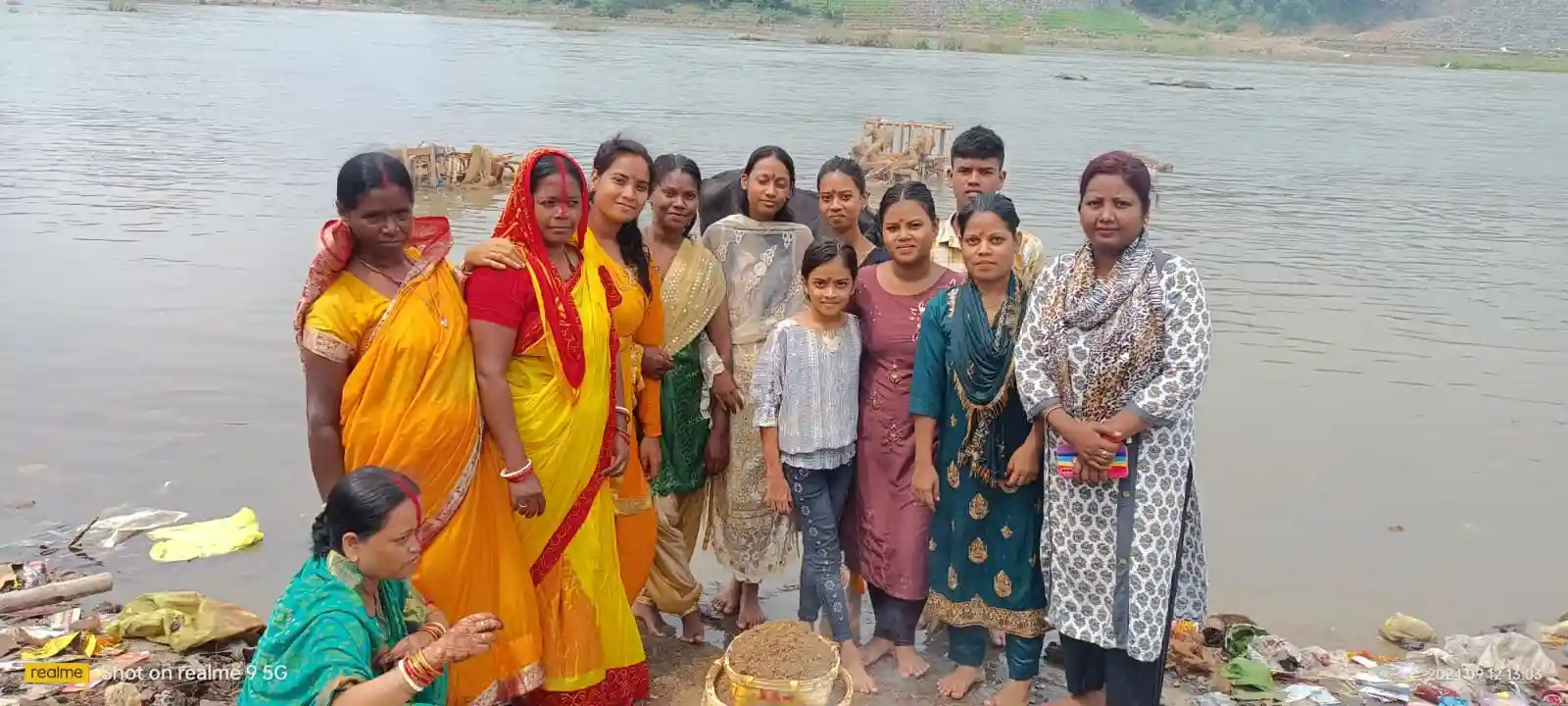
Tribal Munda Girls Perform Traditional Ritual at Suvarnarekha River

Tribal Munda Girls Perform Traditional Ritual at Suvarnarekha River

Young Munda women gather sand for Jawarani Mata ritual, continue sacred practices.
Key Points:
– Munda girls collect sand for Jawarani Mata ritual.
– Traditional songs and dances are performed daily.
– Community leaders support the event with traditional instruments.
JAMSHEDPUR – On Thursday, young women from the Munda tribal community gathered sand from the Suvarnarekha River at Mango for the Jawarani Mata ritual.
The girls, who fasted, filled bamboo baskets with sand and mixed it with seven types of seeds including rice, wheat, and mustard.
The ritual will continue daily until Karam Puja on Bhado Ekadashi.
During this period, the girls will serve Jawarani Mata morning and evening, offering incense and oil lamps.
They will also sing songs and perform dances in the evening to awaken Jawarani Mata.
Community members, accompanied by traditional musical instruments, were present to support the event.
Santosh Samant, Central General Secretary, and Mango Branch President Lakhan Sandil were among those attending.
Invitation to Karam Deity Today, Ritual Installation Tomorrow
Karam Puja is a significant festival for tribal and indigenous communities.
It involves the worship of Karam Raja.
The community first invites the deity by selecting a branch from the Karam tree in the forest, tying a thread around it.
On the day of Karam Puja, villagers perform traditional dances and bring the marked branch to the village.
It is then installed in the village square, followed by the formal worship of Karam Deity.
The festival reflects the community’s deep reverence for nature, particularly trees.
It also highlights environmental conservation and the balance between nature and human life.
Karam Festival Overview
Respect for Nature: The Karam festival symbolizes the deep respect the tribal community holds for nature, particularly the Karam tree.
Environmental Conservation: By worshipping the tree, the community emphasizes the importance of preserving the environment.
Collective Unity: The festival strengthens communal bonds as villagers come together to worship Karam Raja.
Social Solidarity: Through dance and song, the festival fosters stronger relationships among community members, especially the youth.
Agriculture and Livelihood: The Karam festival is also connected to agriculture, with prayers for a good harvest and prosperity.
Culture and Tradition: This festival keeps cultural heritage alive, preserving traditions passed down through generations.


Join Our Newsletter
Related News
Opinion
You May Also Like
Read More
Discussion
Readers' Comments
Recent
EDITOR PICKS
POPULAR POSTS
MUST READ

ABOUT US
Town Post is a leading News Portal of Jamshedpur and Jharkhand.
FOLLOW US
Contact us: editor@townpost.net
© Town Post, Jamshedpur