
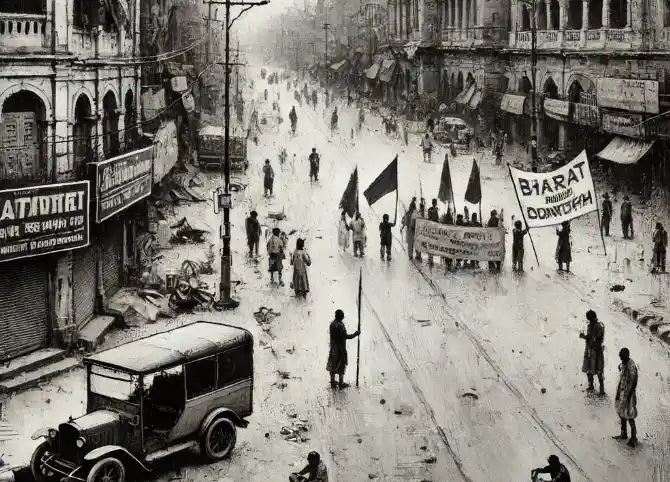
Aftermath of Sudden Bandhs

Aftermath of Sudden Bandhs
Reservation Bachao Sangharsh Samiti calls for Bharat Bandh to protest SC verdict on further classification of Scheduled Tribes and Castes.
India experienced a 14-hour Bharat Bandh on 21st August 2024, as underrepresented communities protested a Supreme Court verdict on reservation classification.

21 August, 2024 India witnessed another nationwide shutdown. The Reservation Bachao Sangharsh Samiti formed by the underrepresented communities called for the 14-hour economic cessation exempting the essential services.
The governmental organizations, banks, educational institutes, power supply and trains were to operate like normal days.
The Bharat Bandh was called on to protest the Supreme Court verdict given on 1 Aug agreeing to grant state governments the right to classify further the Scheduled Tribes and Scheduled Castes as notified in the Presidential list getting done to bring forth more clarity and preference in providing favoritism in workplace and education.
And also, to induce the ‘creamy layer principle’ to Scheduled Tribes and Scheduled Castes, like already operational in case of Other Backward Castes. Thus, to fulfill the objective of clearing the way for the benefits to reach those in dire need of.
The administration was wary beforehand to avoid any unpleasant activity.
The protests were to be peaceful. Though trains and traveling buses were exempted from this closure the services were affected by non-peaceful protestors.
And common people avoided the daily commute as on other normal days. Several schools and colleges remained closed.
The 14-hour shutdown might be a short span of time when compared to larger value of click but it too has an impact of its own however fractional.
A few violent incidents too surfaced during the time which unfortunately involved children and an elderly person. Besides the amount of economic loss occurring during this kind of forced halt, sprung up to lakhs and crores.
The public property damaged in the outrage and the halted trucks running behind time carrying essential and non-essential goods add to the financial losses which in turn become difficult to be compensated.
The worst affected are the daily wage earners for whom a day of bandh can account to less or no availability of food.
Usually the demand for justice begins on the foundation of losses and difficulties for one or many.


Join Our Newsletter
Related News
Opinion
Read More
Discussion
Readers' Comments
Recent
EDITOR PICKS
POPULAR POSTS
MUST READ

ABOUT US
Town Post is a leading News Portal of Jamshedpur and Jharkhand.
FOLLOW US
Contact us: editor@townpost.net
© Town Post, Jamshedpur