
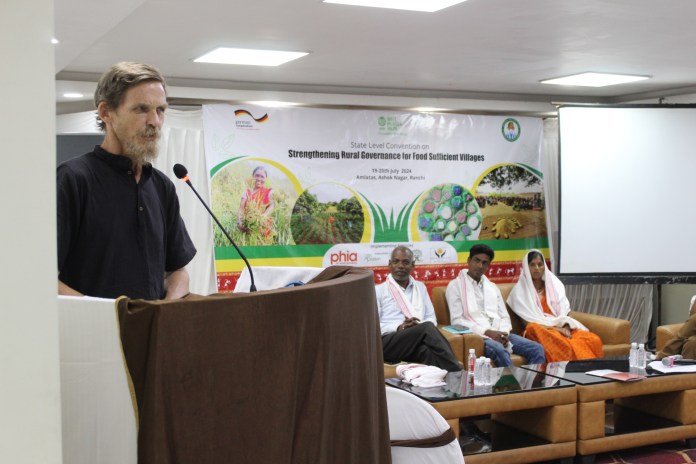
Citizen Support Centers Transform Rural Jharkhand: Jean Dreze

Citizen Support Centers Transform Rural Jharkhand: Jean Dreze

NSKs Bridge Gap Between Government Services and Villagers
Jharkhand’s Nagarik Sahayata Kendras revolutionize rural governance, empowering marginalized communities by facilitating access to essential services across 76 blocks.
RANCHI – Nagarik Sahayata Kendras in 76 Jharkhand blocks are transforming rural governance, facilitating access to essential services for marginalized communities.
The introduction of Nagarik Sahayata Kendras (NSKs) across Jharkhand has marked a significant milestone in rural development.
These citizen support centers have become crucial in connecting government services with underprivileged communities, addressing a long-standing gap in service delivery.
Initiated as pilot projects in select areas, NSKs have now expanded their reach to over 76 blocks, catering to the diverse needs of villagers.
These centers provide invaluable assistance in obtaining critical documents such as death certificates, Aadhaar cards, and ration cards.
Additionally, they facilitate applications for pension schemes and MNREGA-related services, streamlining bureaucratic processes for those who often struggle with them.
"The NSKs have become a beacon of hope for our rural citizens," stated Ramesh Kumar, a local development officer.
"They’re particularly beneficial for those who face language barriers or financial constraints, ensuring that government benefits reach those who need them most."
These centers play a vital role in overcoming technological hurdles that frequently hinder access to welfare schemes.
As government programs increasingly adopt digital platforms, NSKs serve as a bridge, ensuring that even those unfamiliar with technology can access their entitlements.
Social audit experts have lauded the impact of NSKs on transparency and accountability in governance.
By assisting in organizing Gram Sabhas and disseminating information about workers’ rights, these centers contribute to more effective implementation of social welfare programs.
Many observers argue that NSKs could be the key to eliminating intermediaries from the government system, providing a direct and efficient link between citizens and services.
As the landscape of rights-based schemes continues to evolve and undergo frequent technical changes, these centers serve as crucial information hubs for rural populations.
The success of NSKs in Jharkhand presents a model that could potentially be replicated in other states, offering a solution to the persistent challenges of rural development and governance across India.


Join Our Newsletter
Opinion
You May Also Like
Read More
Discussion
Readers' Comments
Recent
EDITOR PICKS
POPULAR POSTS
MUST READ

ABOUT US
Town Post is a leading News Portal of Jamshedpur and Jharkhand.
FOLLOW US
Contact us: editor@townpost.net
© Town Post, Jamshedpur