
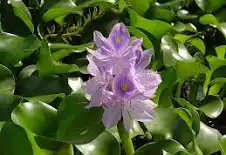
Water Hyacinths Threaten Jamshedpur’s Rivers, Prompt Community Action

Water Hyacinths Threaten Jamshedpur’s Rivers, Prompt Community Action

Early invasion of water hyacinths in Jamshedpur’s Subarnarekha and Kharkai rivers sparks swift response from residents, officials, and corporations.
The premature emergence of water hyacinths in Jamshedpur’s rivers has led to collaborative efforts to combat the invasive species and address underlying pollution issues.
JAMSHEDPUR – Water hyacinths have appeared earlier than usual in the Subernarekha and Kharkai rivers in Jamshedpur, prompting a swift response from local authorities, residents, and corporations.
The invasive aquatic plants have affected significant stretches of both rivers, with a 3 km section of the Kharkai between Kadma and Sonari and a 4 km stretch of the Subernarekha from Sonari to Mango.
Environmentalists attribute this early appearance to current weather conditions, highlighting the complex interplay between climate and ecological issues.
In a show of leadership and community engagement, Jharkhand Health Minister Banna Gupta recently joined forces with local residents and Jusco (Tata Steel Utilities and Infrastructure Services Ltd) in a cleaning drive at Domuhani Ghat, where the two rivers converge.
The initiative saw around 100 participants actively removing water hyacinths, recognizing the immediate threat these plants pose to the rivers’ aquatic life.
Minister Gupta called for sustained action, urging his supporters to conduct weekly cleaning drives.
His appeal underscores a critical point: the presence of water hyacinths is not merely an aesthetic issue but a stark indicator of rising water pollution levels.
The government’s response extends beyond immediate clean-up efforts.
Minister Gupta announced plans to address urban pollution affecting the Subarnarekha river, including measures to prevent untreated drain water from entering the waterway.
This comprehensive approach signals a recognition of the need to tackle the root causes of the problem.
Jusco’s involvement through their Citizens Campaign adds another dimension to the fight.
By focusing on community education about river ecology and the dangers posed by water hyacinths, they’re working to build a more informed and engaged citizenry.
This grassroots approach could prove crucial in fostering long-term, sustainable solutions.
As Jamshedpur grapples with this early invasion of water hyacinths, the situation serves as a microcosm of broader environmental challenges.
The collaborative efforts of government officials, local residents, corporations, and environmentalists highlight the multi-faceted approach needed to address complex ecological issues.
The coming weeks and months will be critical in determining the success of these initiatives.
If the weekly cleaning drives gain momentum and pollution prevention measures take effect, Jamshedpur could set an example for other cities facing similar challenges.
However, the true test will lie in sustaining these efforts and addressing the underlying causes of water pollution that allow water hyacinths to thrive.
As the city rallies to reclaim its rivers, the early appearance of water hyacinths serves as both a warning and a call to action—a reminder that environmental stewardship requires vigilance, collaboration, and a commitment to long-term solutions.


Join Our Newsletter
Opinion
Read More
Discussion
Readers' Comments
Recent
EDITOR PICKS
POPULAR POSTS
MUST READ

ABOUT US
Town Post is a leading News Portal of Jamshedpur and Jharkhand.
FOLLOW US
Contact us: editor@townpost.net
© Town Post, Jamshedpur