
Disappearance of Ipomoea Cornea Raises Ecological Concerns in Jamshedpur

Disappearance of Ipomoea Cornea Raises Ecological Concerns in Jamshedpur

Once Abundant ‘Behaya’ Plant Known for Pollution Absorption Now Extinct in City
Loss of native flora highlights the delicate balance between industrial growth and environmental conservation.
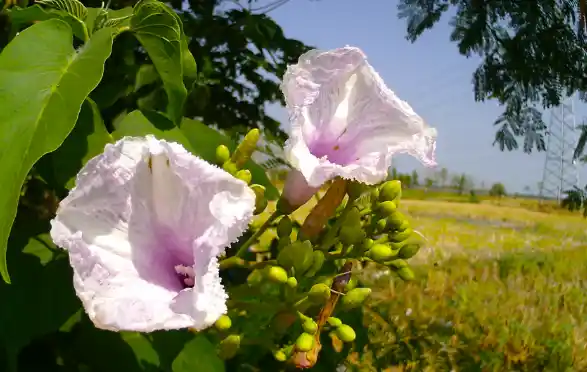
JAMSHEDPUR – Ipomoea cornea, locally known as Behaya or Thethar, has vanished from Jamshedpur’s landscape, marking a significant loss for the city’s ecological balance.
The plant, once ubiquitous across the city until about 15 years ago, played a crucial role in combating industrial pollution.
Botanists have praised Ipomoea cornea for its unique ability to absorb and accumulate pollutants, particularly metals from industrial waste.
A local environmental expert stated, "The loss of Behaya is a blow to our city’s natural pollution control mechanisms."
Ecological Significance and Research Findings
Ipomoea cornea, part of the Convolvulaceae family, was known for thriving in various conditions without maintenance.
A study in the UGC-certified Journal of Emerging Technology and Innovative Research highlighted the plant’s effectiveness in absorbing metal residues.
The research found that roots, leaves, and stems of Behaya could absorb cadmium, copper, chromium, nickel, lead, and zinc.
Dr. Nitish Priyadarshi, Assistant Professor at Ranchi University, emphasized the plant’s eco-friendly and cost-effective nature.
"Behaya not only helped in pollution control but also had significant medicinal properties," Dr. Priyadarshi explained.
Causes of Decline and Concerns
The plant’s population has dwindled not only in Jamshedpur but also in Ranchi, the state capital.
Factors contributing to its decline include smoke exposure when used as fuel.
Dr. Priyadarshi warned, "While Behaya absorbs toxins, it can become toxic itself, posing risks if ingested by animals or if its smoke is inhaled."
Local environmentalist Priya Sharma commented, "The disappearance of Behaya is a wake-up call for better conservation of our indigenous flora."
The loss of this plant species serves as a reminder of the challenges in maintaining ecological balance amid industrial progress.
Environmental agencies are now considering strategies to reintroduce and protect such beneficial native plants in urban areas.


Join Our Newsletter
Opinion
Read More
Discussion
Readers' Comments
Recent
EDITOR PICKS
POPULAR POSTS
MUST READ

ABOUT US
Town Post is a leading News Portal of Jamshedpur and Jharkhand.
FOLLOW US
Contact us: editor@townpost.net
© Town Post, Jamshedpur