
Jharkhand Bandh Cripples Rail, Road Traffic in Kolhan Region

Jharkhand Bandh Cripples Rail, Road Traffic in Kolhan Region

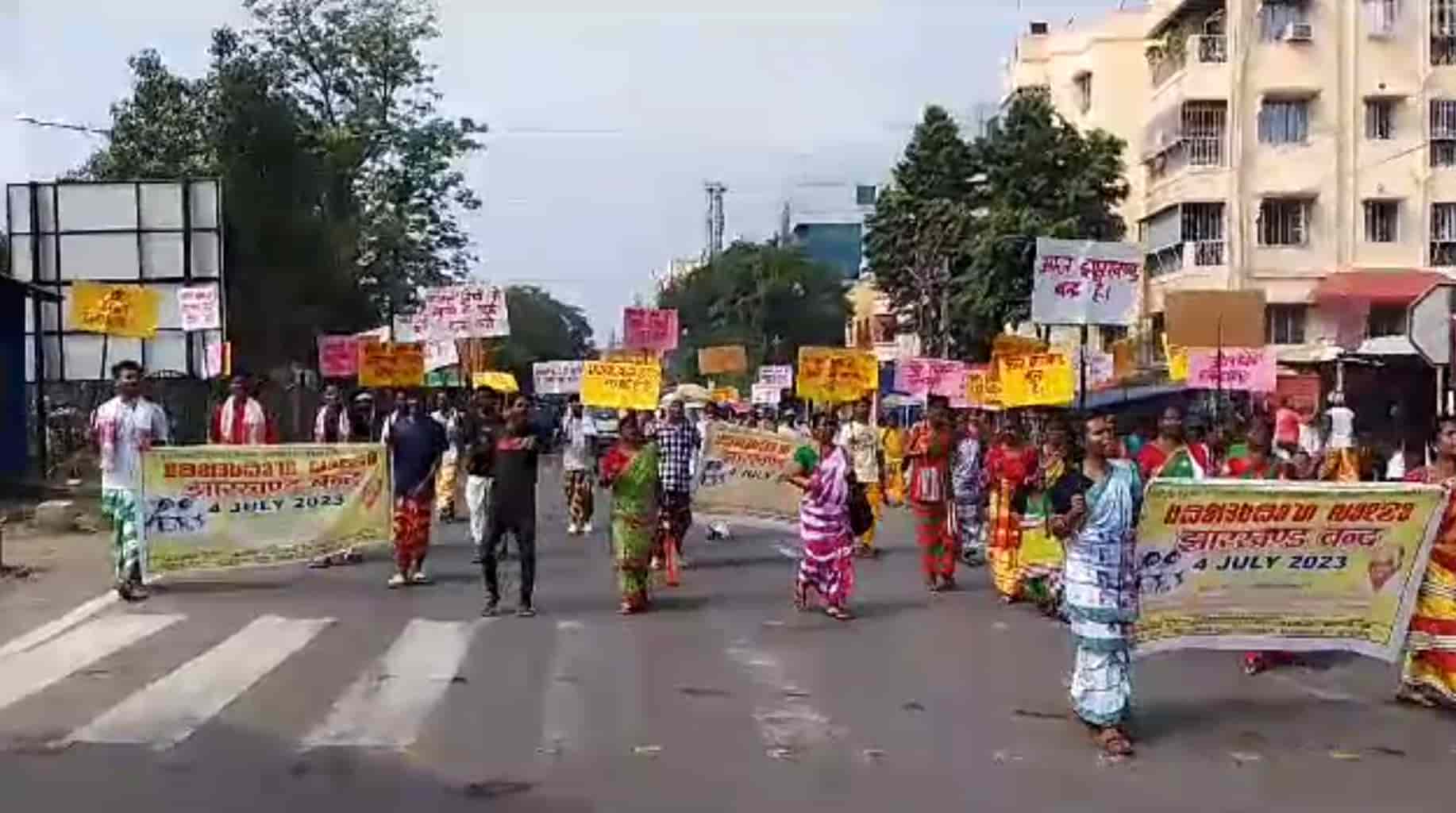
Statewide strike in Jharkhand disrupts transportation and communication, demanding official status for Olchiki Script and Santhali language.
JAMSHEDPUR – The Jharkhand bandh, a strike across the state held on Tuesday, created significant upheaval in the Kolhan region.
The protest was initiated to demand official recognition for the Olchiki language.
This led to serious disruptions in both rail and road traffic as key roads and railway tracks were blocked by supporters of the bandh.

Impact on Rail Traffic
Railway tracks were obstructed at three different locations, namely the Govindpur of Chakradharpur railway division, Talaburu railway gate of Tata-Haldipokhar rail section, and near the Chiruguda station of Kharagpur railway division.
This blockade greatly affected the operations of numerous trains, including the Ispat Express and Jan Shatabdi Express, among others.
Roadblocks and Disruptions
In rural areas, there was a total cessation of transportation services.
Vehicle movement was halted due to roadblocks made by burning tires at several places.
The National Highway 33 was also jammed at three locations leading to significant delays and long queues of stranded vehicles.
Urban vs Rural Bandh Impact
While urban areas saw less effect of the bandh, the impact was quite widespread in rural regions.
Most notably, bus operations, especially those plying from the Mango bus stand to Odisha and West Bengal, were not operational from morning itself.
This resulted in significant disruptions to people’s daily commute and travel plans.
Bridges Blocked, Communication Severed
Bandh supporters blocked the Domuhani Dobo bridge and the Mango bridge, causing major inconvenience to commuters, particularly school-going children.
Sundernagar, a crucial route for people traveling to Odisha, was blocked, severing communication links with Odisha.


Join Our Newsletter
Related News
Opinion
You May Also Like
Read More
Discussion
Readers' Comments
Recent
EDITOR PICKS
POPULAR POSTS
MUST READ

ABOUT US
Town Post is a leading News Portal of Jamshedpur and Jharkhand.
FOLLOW US
Contact us: editor@townpost.net
© Town Post, Jamshedpur