
Education Can Help Mitigate Environmental Pollution: Experts

Education Can Help Mitigate Environmental Pollution: Experts

Two-Day International Conference Inaugurated at DBMS College of Education
Key Points:
- Saryu Roy and Rituraj Singh inaugurate international conference
- Education key to understanding environmental impact and solutions
- Experts highlight NEP reforms, critical thinking, and environmental policies
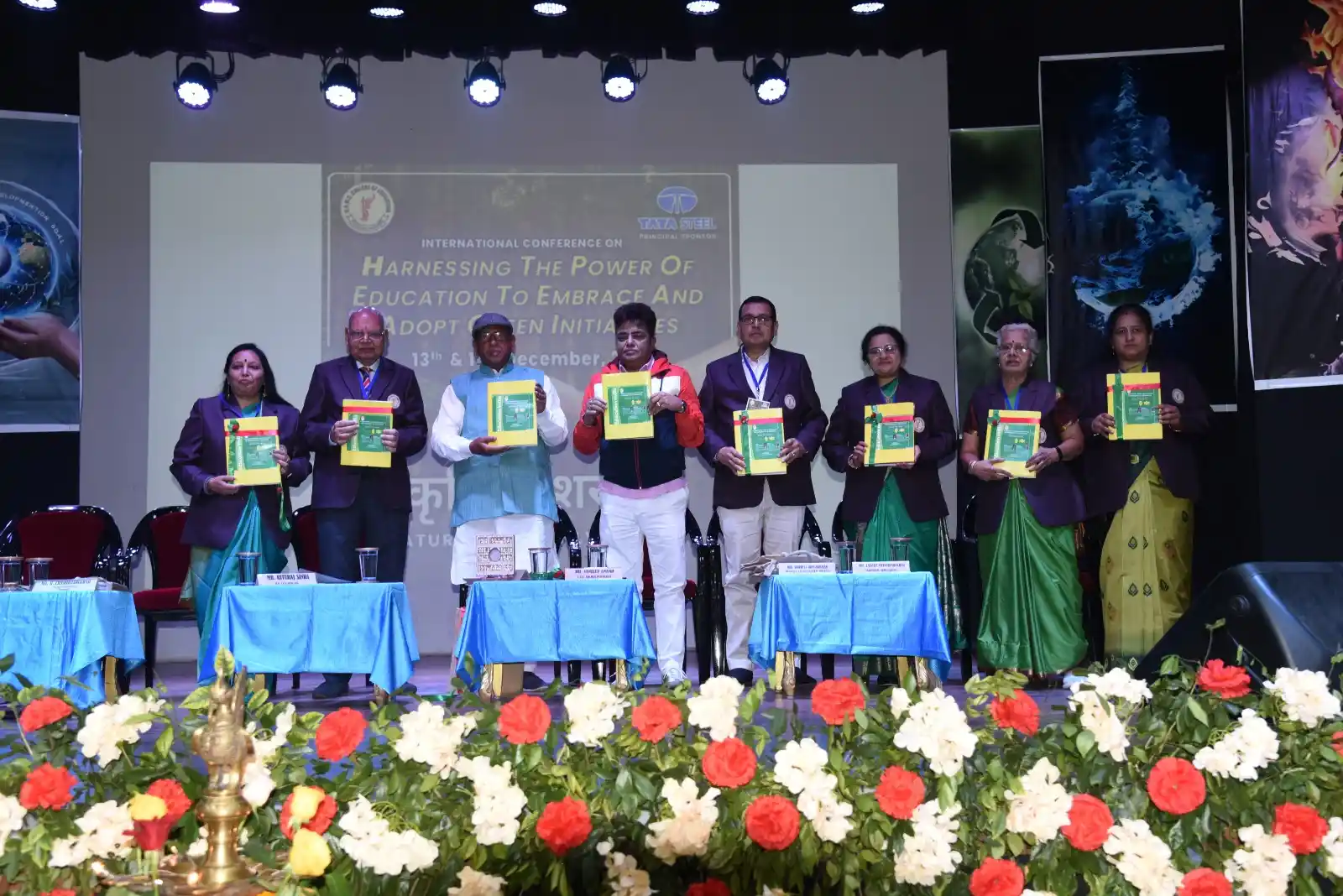
JAMSHEDPUR – A two-day international conference on environmental education and its impact was inaugurated at DBMS College of Education by Chief Guest Saryu Roy, MLA, and Rituraj Singh, MD of Tata Steel UISL, who lit the ceremonial lamp to mark the event’s beginning.
Addressing students from various schools and colleges, Rituraj Singh addressed misconceptions regarding Tata Steel. He clarified, “It is a misconception that Tata Steel’s factory smoke causes pollution. The emissions are controlled and do not contribute to harmful pollution.”
Keynote Discussions on Education and Environment
In the opening keynote session, Professor Ashish Srivastava from BHU highlighted shortcomings in the education sector. He emphasized the flexibility provided by the National Education Policy (NEP), where students can choose their courses without compulsion. Prof. Srivastava introduced the idea of a “Learning Basket,” which focuses on enhancing critical thinking and mental development among students.
He further stressed that the current curriculum has become unnecessarily heavy and proposed including concepts like the Panchabhut and Panchkoshiya framework to make students aware of holistic growth.
The second keynote speaker, Dr. Apratim Sahay from Johns Hopkins University, USA, compared India’s environmental challenges to China’s successes. He noted, “If China could drastically improve its environment in 20 years, India can too.” Dr. Sahay emphasized that China and India had similar GDP levels in 2002, but China’s adoption of green policies has propelled it ahead.
Focus on Health, Nutrition, and Policy Reforms
Dr. Sahay urged India to prioritize health, education, and nutrition alongside humanities and business studies. “Only through healthy diets and better education policies can we combat pollution and improve productivity,” he said. He pointed out that the Indo-Gangetic plain, including Delhi, faces severe pollution challenges, reducing life expectancy by 4 to 8 years due to poor AQI levels.
He concluded by calling for transformative changes in teaching policies to address environmental and health issues effectively.


Join Our Newsletter
Related News
Opinion
You May Also Like
Read More
Discussion
Readers' Comments
Recent
EDITOR PICKS
POPULAR POSTS
MUST READ

ABOUT US
Town Post is a leading News Portal of Jamshedpur and Jharkhand.
FOLLOW US
Contact us: editor@townpost.net
© Town Post, Jamshedpur