
Tata Steel and TSUISL Electricity Rates Remain Stable for Jamshedpur and Seraikela

Tata Steel and TSUISL Electricity Rates Remain Stable for Jamshedpur and Seraikela

JSERC Approves Unchanged Tariffs for 2024-25, Benefiting Residential and Commercial Consumers
The Jharkhand electricity regulatory body maintains current rates, ensuring cost stability for consumers in Jamshedpur and Seraikela-Kharsawan areas throughout the upcoming fiscal year.
JAMSHEDPUR – The Jharkhand State Electricity Regulatory Commission (JSERC) has approved the electricity tariff for 2024-25, keeping rates unchanged for Jamshedpur (TSL) and Seraikela-Kharsawan (TSUISL) areas.
Consumers in both regions will experience no increase in their electricity bills for the coming fiscal year.
The decision covers all consumer categories, including domestic, commercial, and industrial services.
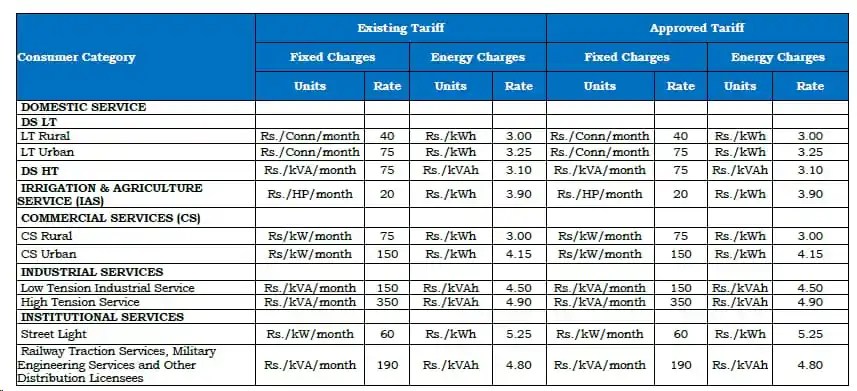
Rural domestic users will continue to pay a fixed charge of Rs. 40 per connection monthly, while urban counterparts will maintain their Rs. 75 monthly fixed charge.
Commercial services in rural and urban areas will see no changes to their existing tariffs.
Industrial consumers, both low and high tension, will also benefit from the rate freeze.
Here’s a breakdown of the approved tariffs for key consumer categories for Seraikela:
1. Domestic Service (DS LT):
– Rural: Rs. 40/month fixed, Rs. 3.00/kWh energy charge
– Urban: Rs. 75/month fixed, Rs. 3.25/kWh energy charge
2. Commercial Services (CS):
– Rural: Rs. 75/kW/month fixed, Rs. 3.00/kWh energy charge
– Urban: Rs. 150/kW/month fixed, Rs. 4.15/kWh energy charge
3. Industrial Services:
– Low Tension: Rs. 150/kVA/month fixed, Rs. 4.50/kVAh energy charge
– High Tension: Rs. 350/kVA/month fixed, Rs. 4.90/kVAh energy charge
A TSUISL representative stated, “Our aim is to maintain affordable and stable electricity rates for all sectors, supporting both residential and business growth in the region.
This decision is expected to provide financial predictability for households and enterprises, allowing for better budgeting and planning in the upcoming year.
Sources added that the commission’s move reflects a careful balance between ensuring consumer affordability and maintaining a sustainable power supply infrastructure in the region.


Join Our Newsletter
Related News
Opinion
You May Also Like
Read More
Discussion
Readers' Comments
Recent
EDITOR PICKS
POPULAR POSTS
MUST READ

ABOUT US
Town Post is a leading News Portal of Jamshedpur and Jharkhand.
FOLLOW US
Contact us: editor@townpost.net
© Town Post, Jamshedpur