
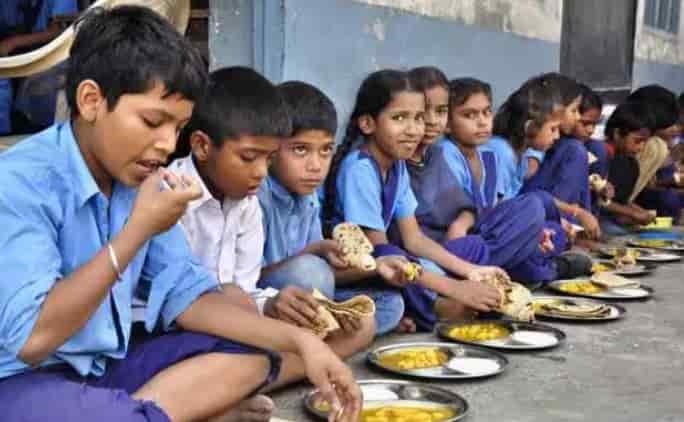
Why Only Mid-Day Meal Scheme (MDMS)? Why Not an Early-Morning Breakfast Scheme (EMBS) Too?

Why Only Mid-Day Meal Scheme (MDMS)? Why Not an Early-Morning Breakfast Scheme (EMBS) Too?

India can afford to give its children one breakfast too. Headmaster Arbind Tiwary lauds the MDMS successes and argues for an Early Morning Breakfast Scheme in Schools too
Improving the Mid-Day Meal Scheme in India: Five Suggestions for Enhancing Effectiveness
If a mid-day meal is very healthy, beneficial and a ground-breaking initiative for Indian children, an early-morning breakfast would surely be equally effective and beneficial for everyone – the child and the society.
Let me first laud the concept of Mid-Day Meal Scheme. This is the single most initiative that has done India and its future the maximum good.
Getting a full meal to all children of the country is no mean feat. It is perhaps as ground-breaking as launching a Chandrayaan 3.
The Mid-Day Meal Scheme (MDMS) is a vital intervention by the Indian Government aimed at providing nutritious meals to children in government schools across the country.

By doing so, it has successfully decreased school dropout rates and increased enrollment, particularly among the economically disadvantaged and underprivileged children. However, the scheme, though beneficial, is not without its drawbacks, particularly related to its implementation.
Using my experience, I put forth these five suggestions that could enhance the effectiveness of this scheme:
1.Incorporate Breakfast: Given that many children come to school hungry, adding a breakfast component to the existing mid-day meal scheme could increase school attendance rates and punctuality. Additionally, it could improve children’s nutritional status, as breakfast is an essential meal that kick-starts the day’s metabolism and contributes significantly to a child’s daily nutritional needs. This will also ensure that children are not attempting to learn while dealing with hunger pangs in the early part of the day.
2. Relieve Teachers of Mid-Day Meal Responsibilities: Teachers play a critical role in the implementation of the MDMS, but this has inadvertently affected the quality of education. A significant portion of a teacher’s time that should be dedicated to imparting knowledge and skills is spent on managing the scheme. To ensure the focus remains on providing quality education, the responsibility for implementing the scheme should be assigned to other bodies. For instance, the Gram Panchayat, local self-governments in villages, can be given this responsibility, freeing teachers to focus on teaching.
3. Implement an Effective Quality Check System: To maintain the quality of the mid-day meal, an effective system for checking the meal quality should be put in place. This system should be managed by the Gram Panchayat or other local bodies, rather than teachers. The system should also incorporate mechanisms for addressing and responding to complaints to ensure continuous improvement in the quality of meals.

4. Panchayat-Wise System: As an alternative to centralized kitchens, a Panchayat-wise system could be implemented. Each Gram Panchayat could be responsible for preparing and distributing the meals within their jurisdiction. This approach could enable more localized control and possibly greater attention to the taste preferences of children in different areas. This would require strong coordination mechanisms and strict quality control to ensure consistent meal quality across different Panchayats.
5. Establish Centralized Kitchens: The establishment of one or two centralized kitchens in each block could improve the effectiveness of the MDMS by ensuring consistent meal quality and potentially reducing costs through economies of scale. However, these kitchens must ensure that the meals they prepare are not only nutritious but also palatable to the children. Given that there have been complaints regarding taste and nutrition from centralized kitchens in areas like Jamshedpur, quality control should be a priority.
From my limited experience, I can tell you that while the MDMS has had a significant positive impact, certain changes could enhance its effectiveness and reach. Including breakfast, relieving teachers of MDMS responsibilities, implementing an effective quality check system, and exploring options for centralized kitchens or Panchayat-wise systems are potential strategies.
While each approach has its advantages and challenges, the common goal should be to provide nutritious meals that attract children to schools without compromising on the quality of education.


Join Our Newsletter
Related News
Opinion
Read More
Discussion
Readers' Comments
Recent
EDITOR PICKS
POPULAR POSTS
MUST READ

ABOUT US
Town Post is a leading News Portal of Jamshedpur and Jharkhand.
FOLLOW US
Contact us: editor@townpost.net
© Town Post, Jamshedpur