Land Caves In at Lodna’s Barari Basti, Fire and Smoke Spread Panic
Key Points:
- Ground Caves In With Blast In Jharia’s Lodna Area
- Toxic Smoke, Flames Emerge From Cracks In Barari Basti
- 110-Year-Old Coalfield Fire Has Burned 3.7 Crore Tonnes Coal
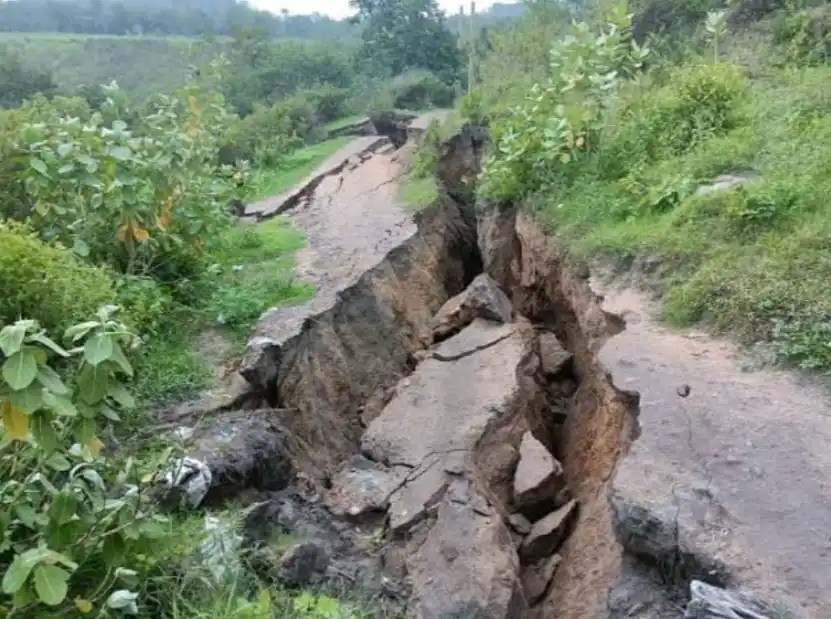
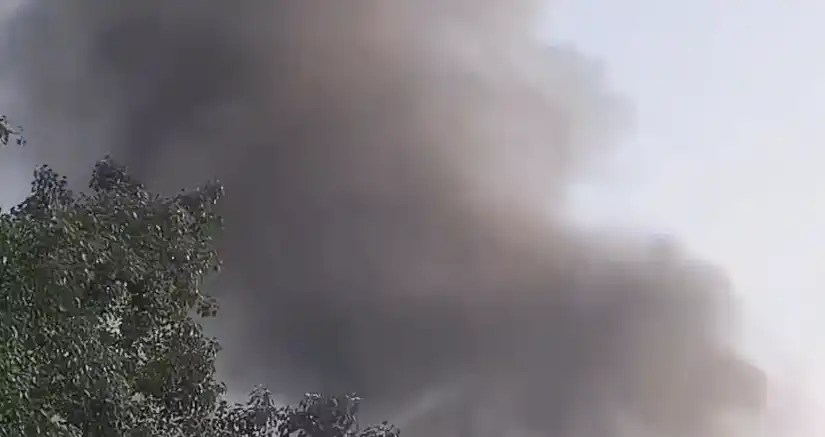
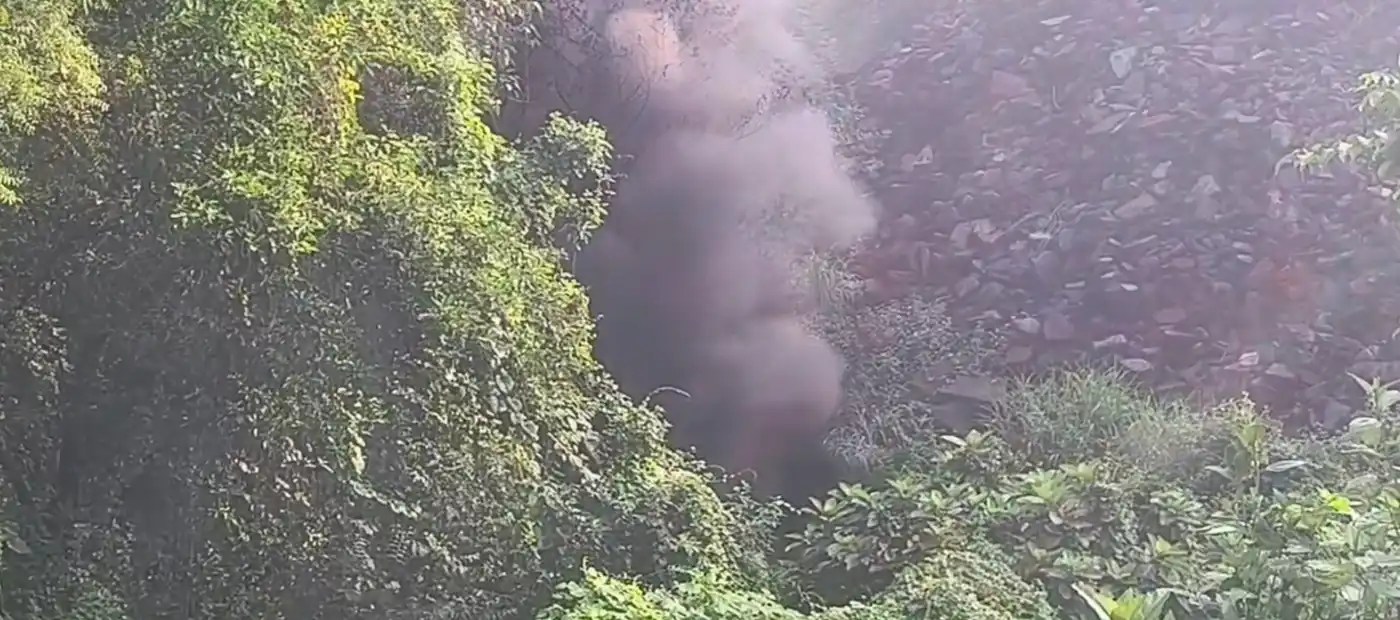
DHANBAD – A loud explosion accompanied the ground caving in at the Lodna area of Jharia on Thursday, sending toxic black smoke and flames rising from the resulting cracks and triggering panic in the neighborhood.
The subsidence occurred suddenly at Barari Chha Number Basti in Lodna, with deep cracks appearing on the ground soon after the blast. However, local residents blamed illegal mining and unauthorized tunnels for the incident, while a Bharat Coking Coal Limited team reached the spot to inspect the damage and assured that the affected area would be filled.
Meanwhile, continuous rainfall has added to concerns over repeated land subsidence in the region. Ground caving and the formation of sinkholes remain an ongoing problem across the coalfield’s danger zones and fire-affected areas.
Jharia’s coalfield fire was first recorded in 1916, meaning the ground has been smoldering for roughly 110 years. Besides unscientific mining practices, abandoned open pits and exposure to oxygen triggered spontaneous combustion in coal seams, allowing the fire to spread over the decades.
By the 1970s, government records showed the fire-affected area at around 18 square kilometers. According to the 2009 Jharia Master Plan, 17.32 square kilometers across 77 sites were affected by fire, a figure that fell to 1.80 square kilometers across 27 sites in a 2021 survey. In addition, remote-sensing studies conducted between 2015 and 2025 found the fire-affected area had grown to about 14.4 square kilometers by 2020 and roughly 15 square kilometers by 2025, indicating renewed activity in some zones.
According to available data, close to 3.7 crore tonnes of coal have been consumed by the fire so far. The Jharia coalfield holds India’s largest coking coal reserves, estimated at around 19.4 billion tonnes, though a significant portion has become unminable due to the fire and subsidence.
Moreover, the government has spent thousands of crores of rupees on firefighting and rehabilitation efforts. In June 2025, the Cabinet Committee on Economic Affairs approved a revised Jharia Master Plan with a financial outlay of ₹5,940.47 crore. Various budgets have previously been spent in phases on fire control, land filling, drainage and rehabilitation work.
Under the Jharia Rehabilitation and Development Plan launched in 2009, thousands of families were to be shifted to safer areas. Several hundred families have already been relocated in different phases, but the full resettlement remains incomplete. According to government estimates, a total of roughly 7,000 to 8,000 families still need to be relocated to fully clear people from the fire and subsidence zones.
Following the latest incident at Barari Chha Number Basti, local leader Sabur Gorai blamed illegal coal mining and alleged unauthorized tunnels for the subsidence, and accused BCCL management of negligence. Besides the inspection, BCCL’s team assured residents that filling work would be carried out in the affected area, though locals are demanding a permanent solution, including a scientific survey of underground conditions, elimination of the fire and gas hazard, and safety measures for the main road connecting Lakshmi Colony.
According to experts, failure to act in time could widen the subsidence zone, posing a risk to both the settlement and road connectivity in the area.